Share the page

Women Leadership in public ICT sector (WLICT)
Project
Published on

-
Project start date
-
Status
Ongoing
-
Project end date
-
-
Financing amount (Euro)
-
15.12m
-
Country and region
-
Africa, Benin, Kenya, Mozambique, Nigeria, Uganda, Tanzania, Senegal, The Americas, Chile, Colombia, Asia and the Pacific, Cambodia, Uzbekistan, Philippines, Europe, Moldova, Kosovo, Ukraine, Middle East, Jordan
-
Funders


The WLICT project aims to advance, worldwide, the equal participation of women, men, girls and boys in shaping tomorrow's digital world.
The underrepresentation of women in digital and leadership roles
In an increasingly digital world, the need for digital policies that incorporate gender equality has become a global imperative. Despite progress, women remain underrepresented in digital and leadership roles within public institutions, perpetuating inequalities and limiting the sector's capacity to respond effectively to the diverse needs of society and to bridge the digital gender divide.
One reason for the underrepresentation of women in leadership roles and careers in the ICT sector is their low representation in Science, Technology, Engineering, and Mathematics (STEM) fields. These gender imbalances in technical fields undermine the potential for an inclusive digital transformation.
Furthermore, the various forms of Technology-Facilitated Gender-Based Violence (TF-GBV) constitute a significant obstacle to women's participation in decision-making roles and hamper their freedom of expression.
WLICT: Increasing the participation of women in the ICT sector
The “Women Leadership in public ICT sector” project responds to these challenges.
This multi-donor project is led by a consortium of six European cooperation agencies. It reinforces Team Europe's continued commitment to gender equality and women's empowerment as part of the Global Gateway investment strategy to advance the equal participation of women, men, girls and boys in shaping tomorrow's digital world.
It has three specific objectives:
- Improving policymakers' capacity to design gender-responsive public policies in the digital sector
- Increase women and girls' access to STEM education
- Making the digital environment safer for women and girls
Gender-responsive public policies in the digital sector
Coordinated by GIZ, this first component aims to strengthen the capacities of decision-makers, elected officials, senior civil servants, private sector executives and civil society leaders, to design and implement gender-sensitive digital policies, strategies and regulatory frameworks.
It fosters multi-stakeholder dialogue, the development of leadership skills and the design of strategic and regulatory instruments, at national, regional and international level.
An increased number of women and girls in STEM courses
Coordinated by ENABEL, this second component encourages women and girls to engage in, and stay in, Science, Technology, Engineering and Mathematics (STEM) fields.
It combines awareness-raising and role models, career guidance, concrete access to education and employment (STEM clubs, IT training) and the building of lasting communities of practice and sisterhood networks.
A safer digital environment for women and girls
Coordinated by Expertise France, this third component aims to tackle technology-facilitated gender-based violence (TF-GBV).
It strengthens public policies for prevention and regulation, in particular through regional legislative support and technical assistance to national institutions, and supports TF-GBV victims and survivors through a mapping of existing services and the roll-out of prevention and support mechanisms.
Sustainable Development Goals
SDG4 - Quality education
Ensure inclusive and equitable quality education and promote lifelong learning opportunities for all
SDG5 - Gender equality
Achieve gender equality and empower all women and girls
SDG8 - Decent work and economic growth
Promote sustained, inclusive and sustainable economic growth, full and productive employment and decent work for all
SDG9 - Industry, innovation and infrastructure
Build resilient infrastructure, promote inclusive and sustainable industrialization and foster innovation
SDG10 - Reduced inequalities
Reduce inequality within and among countries
SDG16 - Peace, justice and strong institutions
Promote just, peaceful and inclusive societies
SDG17 - Partnerships for the goals
Revitalize the global partnership for sustainable development
For further information
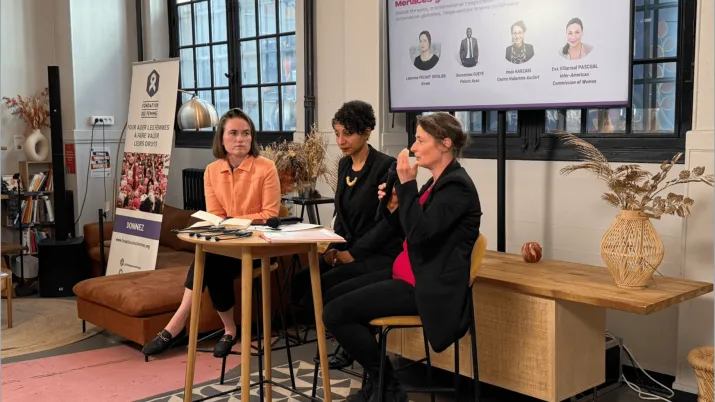
Conference on cyber violence against women
On the occasion of International Women's Rights Day, Expertise France has organised a conference on 17 March 2026 at the Cité Audacieuse — an iconic Parisian third place dedicated to the defence of wo...
Discover our projects
Virtual Museum of Guinea
Ongoing
2025 - 2026
Funders : Ministry for Europe and Foreign Affairs of France

African-European Museum Partnerships
Ongoing
2025 - 2030
Funders : European Union, Agence Française de Développement, German State, Belgian State, Government of The Netherlands

EnMAR+ – Enhanced Maritime Action in the Gulf of Guinea, Red Sea and Western Indian Ocean
Ongoing
2026 - 2028
Funders : European Union
In the news
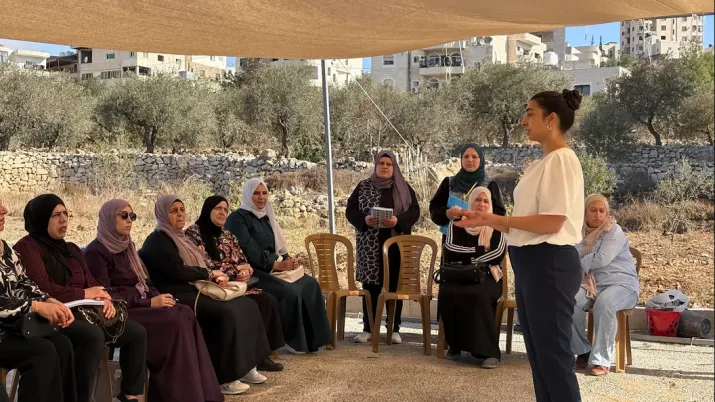
« Online gender-based violence is an increasingly serious issue in Palestine »
Published on March 26, 2026
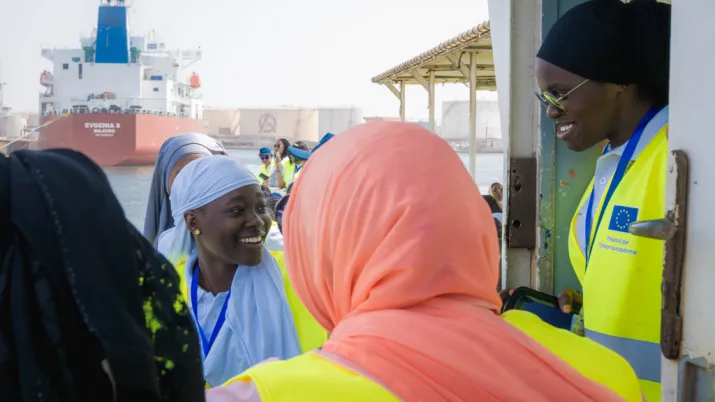
EnMAR Voices: A Podcast to Give Women a Voice in Maritime and Port Security
Published on March 10, 2026
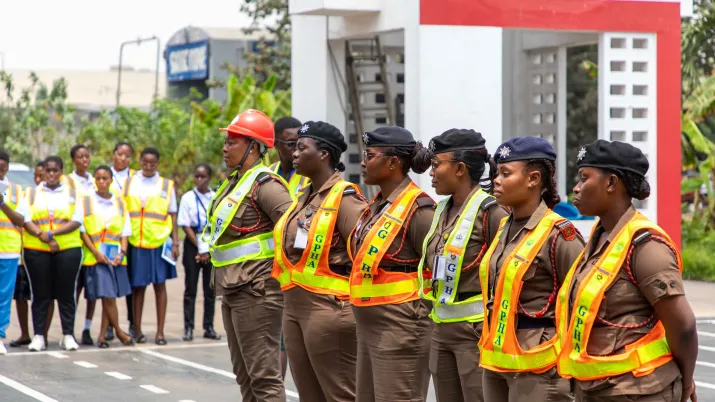
Fighting Online Scams: How the EU ESIWA+ Project Strengthens Cyber Cooperation with the Indo-Pacific
Published on February 12, 2026