Share the page

Social Security Cooperation in Colombia
Project
Published on
-
Project start date
-
Status
Ongoing
-
Project end date
-
-
Financing amount (Euro)
-
0.5m
-
Country and region
-
Colombia, The Americas

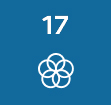
The objective of this project is to support the Colombian government in the areas of health and social protection, in order to promote the development of more equitable, effective, and efficient public policies.
Improving public policies in health and social protection in Colombia
The Cooperation for Social Security in Colombia project seeks to establish quality political dialogue between France and Colombia on the themes of health and social protection. This bilateral dialogue will address:
- support for the decentralisation of public policies;
- development of drug-regulation mechanisms;
- capacity-building for the authorities in charge of drug-system inspection-vigilance-control.
Thanks to the support provided to Colombian institutions active in the sector, the project should improve health and social-protection policies and make them more efficient, effective and fair.
Expected results of the project:
- Colombia’s social protection and health policies will take into account regional specificities and can be implemented locally, more effectively and efficiently.
- Tools will have been co-developed with the Colombian authorities to promote control over the distribution of drugs and their regulation and to strengthen pharmacovigilance.
- The skills of Colombian actors in inspection, vigilance, and control will have been enhanced, and tools proposed to improve healthcare spending control and the rational use of health products and services.
Decentralising health and social protection policy to the regional and local levels
Colombia’s health and social protection context is similar to that of France prior to the creation of regional health agencies in 2010, i.e., at a time when the actions of the Ministry of Health were fully centralised.
Many countries have now adopted the decentralisation of their health plans to the regional level, regardless of the political context. This trend responds to the recommendations of international bodies such as the World Health Organisation, which emphasise the importance of taking into account the geographical specificities and particularities of local populations.
Since 2022, the Colombian government has made health policy decentralisation one of its priorities. It therefore sought support in implementing its health reform plan, so that its health system could be decentralised on a regional and local basis.
The Social Security Cooperation Project falls within this framework. The objective of the project is to provide discussion topics and promote exchanges between Colombian and French officials to facilitate the sharing of experience on:
- implementing health reform;
- helping the State’s “autonomous” entities function better.
Drug access and regulation, and epidemiological vigilance
At the same time, the project’s second action priority contributes to capacity-building for Colombian institutions. A need for technical support was identified for the National Institute for Drug and Food Surveillance (INVIMA). It led to the carrying out of three studies:
1. “Comparative analysis of the models of organisation and financing of health agencies in North and South America and Europe: toward a strategic positioning of INVIMA.”
This study provides a comparative analysis of drug regulation and health security agencies at the global level, with the aim of providing INVIMA with strategic avenues for positioning itself internationally.
The aim is to highlight the key strengths and challenges for the Colombian drug agency, via an in-depth examination of the organisational models, sources of funding, volume of activity, and human resources mobilised.
Download the study
2. “Technical inputs for developing a strategy for the regulatory convergence of drugs in Latin America and the Caribbean: market analysis, value chains, and roadmap for regional integration”
The objective of this document is to provide technical data for INVIMA decision-makers to develop and negotiate a common strategy for drug regulation. They will base this on solid data and international good practices, taking into account the fact that a regional common market for medicines exists.
More specifically, the report analyses the markets of Mexico, Colombia, Argentina, Chile, and Brazil. It proposes a roadmap for 2025-2030, with a view to moving toward regional integration that would combine joint assessments, regional registries, and integrated pharmacovigilance, inspired by African and European drug agencies and adapted to the reality of Latin America and the Caribbean.
Download the study
3. “Public sources of drug regulatory authorities of Argentina, Brazil, Colombia, Chile, and Mexico. Analysis and recommendations for integration and interoperability.”
This study has three components.
- An inventory of public sources of available regulatory information was carried out for the drug agencies of Mexico (COFEPRIS), Colombia (INVIMA), Brazil (ANVISA), Chile (ISP) and Argentina (ANMAT). It includes health registers, drug databases, evaluation body decisions, and published technical standards.
- Mapping of the evaluation processes of the health register is developed at each agency based on this inventory. The objective is to identify points of convergence that enable agencies to exchange information without modifying their internal evaluation processes.
- Finally, the study proposes a standardised data model and a progressive integration plan in order to make exchange between agencies operational.
Sustainable Development Goals
SDG3 - Good health and well-being
Ensure healthy lives and promote well-being for all at all ages
SDG17 - Partnerships for the goals
Revitalize the global partnership for sustainable development
On the same topic

SOCIEUX+ - EU expertise on social protection, labour and employment
Ongoing
2024 - 2027
Funders : European Union, Government of France, Belgian State, Spanish State

USP2030 - Support for Establishing Universal Social Protection
Ongoing
2024 - 2027
Funders : European Union, German State

In the news
Promoting decent work in a context of transition in Latin America
A core facet of France’s international action is decent work, as promoted by the International Labour Organization (ILO). At Expertise France, this translates into tangible support for public policies...
Published on May 28, 2026