
Share the page
Improving Food Environments: how can public policy help?
Published on
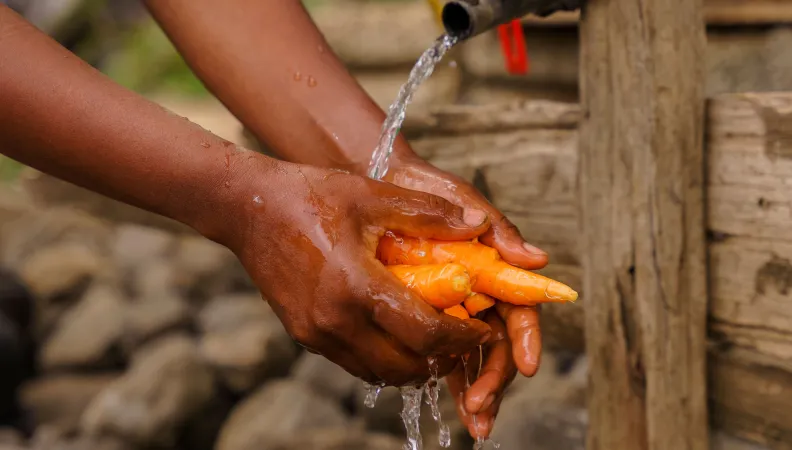
In 2025, obesity indicators surpassed underweight indicators for the first time amongst children and adolescents aged 5 to 19 worldwide. But this trend does not signify the end of undernutrition; rather, it shows the coexistence of different forms of malnutrition, which call for appropriate public policy responses. To mark World Food Day, we interviewed Valérie Greffeuille, a nutrition expert and EU4SUN project manager at Expertise France, for her analysis on the levers available to public authorities to influence food environments. The main goal of the EU4SUN project, currently active in some 30 countries across Africa, Latin America and the Caribbean, is to strengthen nutrition policies and governance. The interview highlights the key takeaways from a brief on introducing a tax policy on unhealthy foods (“Se lancer dans une politique de taxation des aliments malsains”), written in collaboration with GRET as part of the EU4SUN project.
In this interview to mark World Food Day, Valérie Greffeuille, a nutrition expert and EU4SUN project manager at Expertise France, analyses the levers available to public authorities to influence food environments.
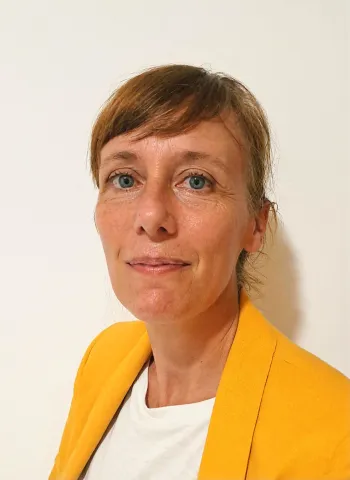
What major changes can we see today with regard to nutrition issues?
We’re facing a major nutritional transition. Nutrition policies have long focused primarily on undernutrition and nutritional deficiencies. Whilst these issues are still topical, they now coexist with a rapid rise in overweight and obesity, and with their associated noncommunicable diseases: diabetes, high blood pressure, cardiovascular disease and certain cancers.
This is known as the “double burden of malnutrition”. Within a single country, or even within a single population group or an individual, undernutrition, micronutrient deficiencies, overweight and obesity can all coexist. This situation requires a broader range of responses. We must no longer view nutrition solely in terms of the quantity of food available; we must also consider its quality and the contexts in which food choices are made.
Why focus on food environments rather than just individual behaviour?
Food choices are not just a matter of individual decisions. They also depend on what’s available and affordable, on how products are sold and promoted (particularly through marketing and advertising), on the information provided to consumers, and on the food on offer near schools.
Public authorities have a number of tools at their disposal. They can conduct information and awareness-raising activities, impose nutritional labelling, regulate advertising (especially that aimed at children), enact measures in schools, improve access to healthy food, and implement fiscal measures.
The challenge lies precisely in linking these various tools. A taxation policy taken alone cannot resolve all the problems associated with malnutrition. However, it can help to change the food context when combined with other measures.
What are the possible advantages of nutritional taxation?
The principle is to use taxation as a public health tool. By increasing the price of certain products with high sugar, salt or fat content, or of certain ultra-processed products, the primary aim is to reduce their consumption.
Sugary drinks are currently the best-documented example. More than 100 countries have already introduced a tax on such products. However, the effects observed depend heavily on the level of taxation and on how the tax has been designed. In the case of sugary drinks, a sufficiently high tax rate is needed for there to be significant impact on behaviour.
Taxation can also influence supply. When a tax is adjusted according to sugar content, for example, a manufacturer may have an incentive to reformulate their product so that it falls below the tax threshold. A good illustration of this effect can be found in the United Kingdom, with significant product reformulations having occurred after introduction of the sugar-sweetened drinks tax. Other examples, such as those in Mexico and South Africa, show that the effects vary depending on the context and the measures put in place.
We must nevertheless remain cautious about the long-term health effects of such a tax. It’s relatively easy to measure changes in purchasing or consumption. But it’s much more complex to attribute a decrease in obesity, diabetes or cardiovascular disease to a single tax, as many factors are involved.
What gave rise to this brief, and what needs does it address?
This brief is a direct outcome of the research and discussions carried out as part of EU4SUN. In Côte d’Ivoire, for example, Expertise France supported the initial studies aimed at assessing the feasibility of a taxation policy. This action falls within a broader initiative: at the Nutrition for Growth Summit, held in Paris in March 2025, taxation was highlighted as one of the policy levers available to governments and parliamentarians, and several countries made commitments along these lines. At the request of certain countries, we have also organised peer-to-peer exchanges of experience, notably with Morocco and Chad.
It was in response to these requests that we identified the need for a simple guide that can be put into practice. Many international resources already exist, notably those produced by WHO, but they can be highly technical. We wanted to address a much more practical question: where should a country start if it wants to begin exploring the issue of nutrition taxation?
The brief sets out a framework to address this issue. It shows how to conduct an assessment, determine objectives, identify the relevant products, design the tax instrument, analyse its potential effects, ensure its acceptability and provide for it to be monitored. The aim is not to propose a one-size-fits-all solution, but rather a method enabling each country to address each essential stage in developing such a policy.
What’s required to design an effective nutrition-based tax system adapted to the local context?
The first is the quality of the assessment. Data are needed on consumption patterns, nutritional and health status, prices, distribution channels and the product ingredients. In some countries, this information remains quite sketchy, a situation which can significantly slow down the development of public policy.
The next step is to clarify whether the objective is to reduce the consumption of certain products, generate public revenue, or a combination of the two. This choice largely determines how the tax is designed.
Finally, this type of policy can very quickly go beyond the remit of the Ministry of Health alone. The choice may also concern the Ministries of Finance, Trade and Agriculture and involve researchers, parliamentarians, civil society and economic stakeholders. It’s essential for scientific data to be understood, discussed and translated into public policy.
Morocco’s experience is interesting in this regard: parliamentarians, scientists, physicians and other stakeholders have joined forces to document nutritional issues and inform the public debate. This shows that a nutritional taxation policy is as much a political process as it is a technical one. It requires not only the development of sound arguments, but also the formation of coalitions capable of sustaining the reform over the long term.
What are the main points to bear in mind and the limitations of this tool?
The first concerns the data: there may not be enough data to accurately predict the effects of a tax.
The second concerns the informal sector. In countries where a significant proportion of food is sold outside formal channels, a tax may lead to a shift towards untaxed products without necessarily improving food’s nutritional quality.
The issue of equity must also be taken into account. A rise in prices can place a greater burden on the lowest-income households, which are often more vulnerable to unfavourable food environments and nutritional risk factors.
Finally, it’s not always possible to allocate tax revenue directly to health or nutrition programmes. National budget rules may restrict this type of earmarking.
For all these reasons, nutritional taxation should be viewed as one tool amongst others, and not as a stand-alone solution.
More broadly, how does EU4SUN help strengthen nutrition policies?
EU4SUN is based precisely on the idea that nutrition is a multi-sectoral issue. The project helps guide countries in building their capacity to design, fund, implement and monitor their nutrition policies, in line with their own priorities.
The EU4SUN initiatives have therefore taken a wide variety of forms: developing and evaluating multi-sectoral plans, monitoring spending on nutrition, calculating the cost of malnutrition; supporting civil society and youth networks, providing support for commitments made at the Nutrition for Growth Summit, and developing an online training course on accountability in nutrition.
These experiences show that there is no single lever for achieving sustainable improvements in nutrition. Action must be taken across the board – in governance, funding, knowledge, behaviour and food environments. Nutritional taxation forms part of this broader approach: it can be a powerful lever, provided it is designed to reflect the country’s specific circumstances and is integrated into a wider nutrition policy.
In the news
Why sexual and reproductive rights remain a great challenge in West Africa
Published on September 3, 2026

Six Innovations to Strengthen Health Human Resources in Francophone Countries
Published on July 10, 2026

On the same topic

Promoting the resumption of essential service provision for conflict-affected communities in Ethiopia
Ongoing
2023 - 2027
Funders : Ministry for Europe and Foreign Affairs of France, European Union
L'Initiative – AIDS, Tuberculosis, Malaria
Ongoing
2011 - 2028
Funders : Ministry for Europe and Foreign Affairs of France