Share the page
Six Innovations to Strengthen Health Human Resources in Francophone Countries
Published on
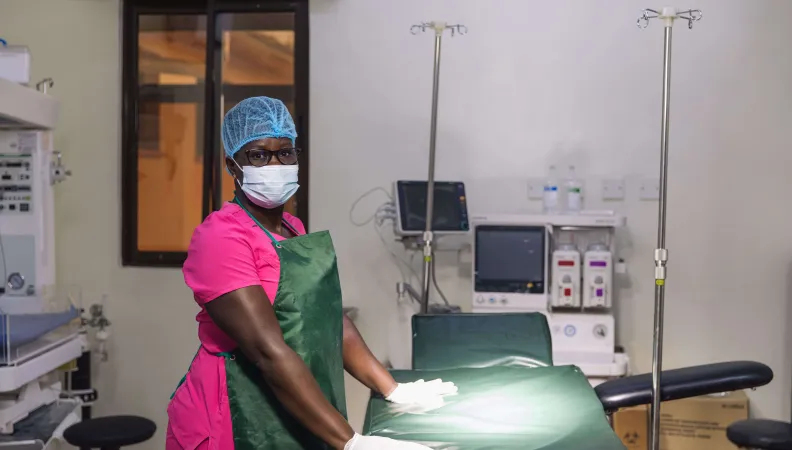
Funded by Agence Française de Développement (AFD) and implemented by Expertise France, the RHIS (Innovative Human Resources in Health) programme supports six projects selected following an international call for projects launched in 2026. These initiatives cover several aspects of health human resources: training, team support, community health, diagnosis, and clinical decision support in Francophone countries.
Health human resources play a decisive role in ensuring access to quality care. However, in many Francophone countries, health systems encounter persistent challenges such as shortages of specialists, difficulties in training and retaining professionals, the remoteness of personnel working in rural areas, unequal access to continuing education, and rapid development of medical practices. Additional challenges are the effects of climate change and the need to develop more resilient health systems.
In response, the RHIS programme was developed to support six innovative projects. Selected following an international call for projects, these initiatives experiment with new approaches to training, team support, community health, and guidance for clinical decisions. They illustrate the diversity of solutions that can be put into action to sustainably strengthen the skills of health professionals and, through them, the quality of care.
A new approach to training healthcare professionals
Two projects focus on educational innovation to boost capacity building.
In Vietnam, the Pham Ngoc Thach University of Medicine and the University of Angers are developing VIETAL, a virtual patient simulation system based on artificial intelligence. Students practice analysing clinical cases, making a diagnosis, and choosing a treatment before they are confronted with real-life situations. The project also provides for the training of teachers in order to mainstream this educational approach into the university curriculum over the long term.
In Cambodia, CamboPath addresses the lack of specialists in anatomopathology, a discipline crucial for cancer diagnosis. Initiated by the University of Health Sciences of Cambodia along with several French partners, CamboPath is setting up a digital platform bringing together virtual slides, educational resources, and exchanges between experts. By facilitating access to continuing education and the sharing of expertise, it helps to build the capacities of Cambodian practitioners over the long term.
Improving care practices on the ground
Other initiatives focus on supporting professionals in their real-life practice conditions in order to improve the quality of care.
In northern Benin, Médecins du Monde Switzerland and the Parakou Training Institute for Nursing and Obstetrics are implementing a project dedicated to respectful maternity and neonatal care. The project provides for the training of nearly 1,500 professionals and students, support for field teams, and equipment for pilot maternity hospitals. By making respect, consent, and the quality of care core aspects of medical practices, the project aims to sustainably improve the experience of women and newborns and at the same time document the changes observed.
In Senegal, the AMIS-RHS project brings together several universities working on a bilingual French-Wolof clinical assistant tool for professionals working in rural health posts. This tool, which can be used offline, facilitates access to care protocols, guides clinical decision-making, and improves health data collection. It is undergoing testing in an initial district and is expected to benefit nearly 50,000 people before being deployed on a wider scale in areas furthest from specialised resources.
Strengthening community health
Finally, two projects focus on community health workers, who are key players in the link between people and health systems.
In Senegal, HUB-RHS Prox, supported by ENDA Santé, supports 600 community health workers through training content accessible offline. It is available in local languages and backed up by an AI-based assistant developed using national resources. The project also combines mentoring, bolstering women’s leadership, and producing data useful for steering health policies, especially in the face of health and climate risks.
In Benin and Senegal, the Comlan Alfred Quenum Regional Institute of Public Health, the ISED institute of Cheikh Anta Diop University, and Benin’s National Agency for Primary Health Care are developing a common certification pathway for community health workers. Tested with 80 pilot health workers, this training combines technical skills, digital health, data ethics, gender, the One Health approach, and climate change adaptation. It could eventually act as a reference at the regional level.
Find out more about the RHIS programme
Innovative health human resources
The support project to improve health human resources seeks to improve health service access and quality in several French-speaking countries.
- When ?
-
2025 - 2028
Status
Ongoing
- Location
- Africa, Asia and the Pacific
- Funders
- Agence française de développement
- Financing amount
- 6m €
In the news
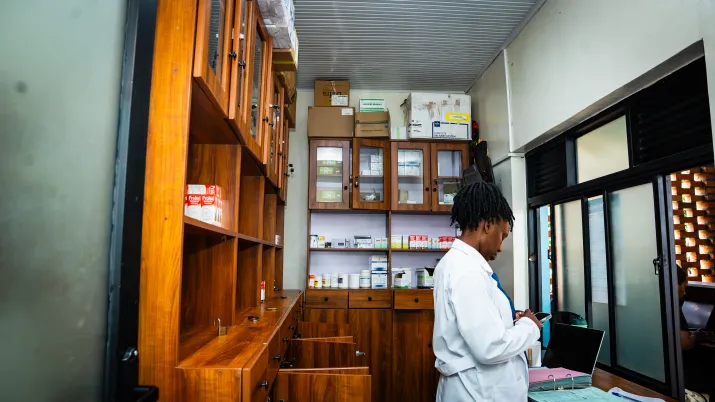
Key Priorities to Address Antimicrobial Resistance in Dominican Republic
Published on November 20, 2025

Our projects
Promoting the resumption of essential service provision for conflict-affected communities in Ethiopia
Ongoing
2023 - 2027
Funders : Ministry for Europe and Foreign Affairs of France, European Union
Social Security Cooperation in Colombia
Ongoing
2022 - 2026
Funders : Agence Française de Développement