Share the page
Early pregnancies, maternal mortality, access to health care: why sexual and reproductive rights remain a great challenge in West Africa
Published on
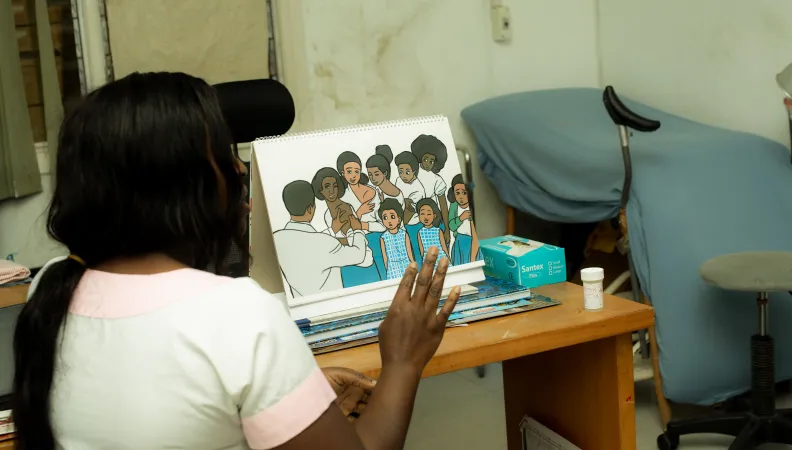
Sexual and reproductive health services have been strengthened in many West African countries. However, the mere existence of these services does not guarantee their effective access, their quality or the empowerment of their users. Youssouf Diallo is a physician, public health expert and head of the Sexual and Reproductive Health Rights Access and Accountability Programme in West Africa (PARD-AO). On the occasion of the 12th African Conference on Sexual and Reproductive Health and Rights (ACSHR), held in Conakry on 2–5 September 2026, and World Sexual Health Day on 4 September, we interviewed him on the progress made, the obstacles encountered and the levers for regional action.
Sexual and reproductive rights and health are sometimes portrayed as imported issues. What is your response to that?
We need to look back at history. Sexual and reproductive health issues did not suddenly appear in Africa as the result of external partners. African countries have made their own commitments since the International Conference on Population and Development in Cairo, followed by those in Beijing, Nairobi and above all the Maputo Protocol.
And even before we talked about “sexual and reproductive health and rights” in the terms we use today, our countries were already working on maternal and child health, child survival, family planning and the reduction of maternal and infant mortality. These are issues that are deeply rooted in Africa’s health realities.
It’s important to bear this in mind because some issues are now portrayed as alien to our societies. Yet, the Maputo Protocol is an African protocol. Africa has set its own guidelines on women’s rights and reproductive health.
The primary responsibility therefore lies with States. Partners can provide support, funding and expertise, but they cannot replace public authorities in the long term. The challenge is for our countries to assume genuine ownership of these issues, both politically and financially.
Progress has been made, particularly in maternal and child health, but why is it still so fragile?
We must first recognise the progress made. We are seeing a downward trend in maternal mortality in the region, although the situation varies considerably from one country to another. Family planning has also made progress, and sexual and reproductive health services are now much better mainstreamed into health systems and primary health care. This is a significant achievement.
However, just because a service is available does not necessarily mean it is accessible, high-quality or actually used.
That is where much of the challenge lies today. We must be able to offer a woman living far from a capital city the same quality of care she would receive in a major urban centre. It’s also essential to be able to deal swiftly with pregnancy complications; make caesarean sections available when necessary; and have trained staff, equipment and healthcare supplies on hand – sometimes even just clean drinking water and electricity in a health centre.
Early marriage and early pregnancy also remain a major issue. When a girl enters into a relationship when she’s very young and becomes pregnant before her body is ready, there can be serious health consequences with a lasting impact on her life as a young girl and young woman.
We’ve reached a milestone because services are now more widely available. But now we have to ensure that they are of good quality, that they are distributed equitably across the country, and that they are used effectively.
What are the current main barriers to effective access to sexual and reproductive health services?
Very strong social and cultural barriers still exist, as do political barriers.
Some issues remain difficult to address publicly, such as comprehensive sex education, safe abortion and women’s autonomy in decisions that affect their health. Resistance to these issues has very real consequences: it can delay access to information, contraception and healthcare; perpetuate the tendency for early marriages and pregnancies; and prevent some women and girls from deciding for themselves when and how to access healthcare services.
It’s also important to recognise that there is sometimes a lack of political courage. Politicians are aware of these public health issues but are sometimes reluctant to take action because they are afraid of their constituents’ reactions or of certain opinion leaders.
In my view, we need to return to a very tangible definition of the law. Having sexual and reproductive health rights means being able to access good-quality service when you need it. But it also means being able to decide for yourself whether to access it, without having to ask someone else for permission.
We must be able to discuss these issues without caricaturing societies or artificially pitting health, culture and religion against one another. At the same time, we can’t simply brush aside difficult issues just because they are sensitive.
What does PARD-AO’s “catalyst project” approach mean in concrete terms?
The rationale behind PARD-AO is precisely that it should not be a stand-alone project which would set up its own system and then disappear once its funding runs out. We want to build on what already exists, consolidate what works, and use the project’s resources to make progress in certain strategic aspects of the system.
This especially involves community health. The West African Health Organisation (WAHO) has developed guides and guidelines which can now be put into action more widely. We need to strengthen not only community health workers, but also personnel in primary healthcare facilities, and to better coordinate these services with the health districts and universal health coverage.
There’s also the issue of funding and public accountability. In several countries, local authorities play a crucial role in managing health services. They should thus be involved more closely and encouraged to invest in these services. This is all the more important when certain sources of external funding are being cut: a service that relies exclusively on an external partner remains vulnerable.
Finally, there’s the question of accountability. Civil society organisations must be able to analyse data, monitor commitments made and challenge decision makers. Such challenging doesn’t have to be confrontational, but it must be authentic dialogue to ask what was promised, what was achieved and what remains to be done.
This, for me, is a catalyst project: not doing everything yourself, but taking action where it can help an existing system to take an additional step forward.
Why does PARD-AO also work in the fields of healthcare products and pharmaceutical regulation?
Because access to rights cannot be separated from access to available, safe and high-quality healthcare products. In practical terms, simply having access to a contraceptive or other healthcare product is not enough. It’s crucial for their authorisation to have been carried out properly, for their quality to be controlled, and for the relevant authorities to be able to monitor the products available on the market.
The Covid-19 crisis brought the issue of pharmaceutical sovereignty back to the forefront. In PARD-AO, we work in particular with regulatory agencies in Nigeria, Benin and Senegal, focusing on three areas: product approval, inspection and clinical trials.
We often talk about the supply chain, including needs assessment and goods purchase, transport, storage and distribution. All of this is essential. But we also need institutions capable of monitoring product quality, authorising their release on the market and carrying out inspections and checks.
Here, too, we are looking to build on what already exists. PARD-AO draws in particular on the experience of Reg-Pharma, which has already developed training programmes in partnership with Cheikh Anta Diop University in Dakar and Félix Houphouët-Boigny University in Abidjan. The aim is to build on this momentum by developing accredited training programmes, particularly in the field of pharmaceutical regulation.
The idea is therefore not just to provide occasional training for professionals. It’s also a question of strengthening their skills over the long term and helping to stabilise human resources in public institutions. It’s another way of strengthening healthcare systems rather than creating parallel structures.
What role can the regional level play in implementing commitments to sexual and reproductive health rights?
First of all, the regional level makes it possible to foster dialogue between countries.
WAHO, for example, is an intergovernmental organisation. States discuss their progress, difficulties and commitments there. This way, everyone can see what the others are doing, learn from their experiences and gauge how far they still have to go.
The regional dimension may also be helpful when it comes to politically sensitive issues. Public officials may be convinced of the need for certain changes but find themselves facing strong resistance within their own national context, for example. A regional framework can in this case provide a common point of reference, serve as a reminder of commitments already made, and lend greater weight to certain policy directions.
And this cooperation is not merely political: it can have very tangible effects. For example, WAHO has set up a regional mechanism for reproductive health products, which can facilitate cooperation between countries, particularly in the event of a supply shortage.
There’s thus the dual advantage of creating collective political momentum and building joint operational solutions.
What have you come to advocate for at the Conakry ACSHR?
The themes of this conference are directly related to PARD-AO’s priorities: the rights of women and young people, access to services, as well as the funding and sustainability of responses.
For a regional programme such as ours, attending the conference in Conakry is important for two reasons. First, to listen: we are just beginning the implementation process, and we want to look at what works elsewhere, the experiences that produce results, the data that emerge, and what can be adapted to the countries where the programme operates.
Next, we want to raise awareness about PARD-AO’s unique approach. We’re not seeking to create a parallel system or to start from scratch, but rather to build on what already exists: public policies, WAHO tools, experiences in member countries, what other projects have achieved, and the capacities of national institutions. It’s this catalyst project approach that we wish to promote.
I will also present PARD-AO at a plenary session. More broadly, we’re involved in a collective effort alongside our partners in Conakry, in particular the Guinea SRHR project. This connection is important: in Guinea, as elsewhere, we want to build on what already exists and continue what has already produced results.
The message I’d like to convey is therefore simple: progress has been made, but it remains fragile. We don’t have the right not to consolidate that progress. The challenge now is to ensure that sexual and reproductive health services are genuinely accessible, sustainable and capable of meeting people’s needs.
Our projects
L'Initiative – AIDS, Tuberculosis, Malaria
Ongoing
2011 - 2028
Funders : Ministry for Europe and Foreign Affairs of France
EU4SUN - Support to make the SUN 3.0 Nutrition Strategy operational
Ongoing
2023 - 2026
Funders : European Union
Social Security Cooperation in Colombia
Ongoing
2022 - 2026
Funders : Agence Française de Développement
In the news
In Southeast Asia, providing long-term support to the circular economy, health and security
Published on October 6, 2025