Share the page

Trans-Caspian Transport Corridor: strengthening sustainable connectivity between Europe and Central Asia
Project
Published on
-
Project start date
-
Status
Ongoing
-
Project end date
-
-
Financing amount (Euro)
-
15.34m
-
Country and region
-
Kazakhstan, Kyrgyzstan, Tajikistan, Turkmenistan, Uzbekistan, Asia and the Pacific
-
Partners
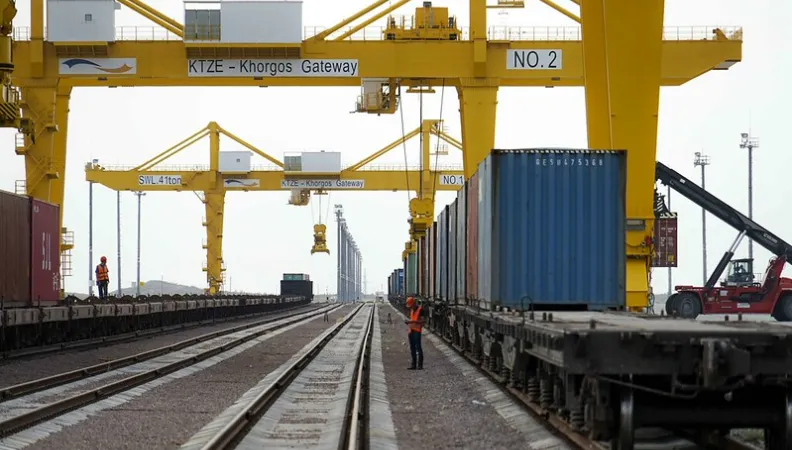
Through non-physical measures to develop sustainable reforms, this programme is helping to modernise the Trans-Caspian Transport Corridor (TCTC) with the goal of facilitating trade between Europe and Central Asia.
The TCTC programme: Building a more efficient corridor through targeted reforms
Central Asia is of increasing strategic importance for the European Union because of its position as a land bridge between Europe and Asia, its natural resources, and its growing economic potential. The TCTC is a multimodal rail, road, and maritime corridor connecting Asia to Europe via Central Asia, the Caspian Sea, the Caucasus, and Türkiye. It acts as a strategic alternative to other corridors to the north and south, which are marked by unstable geopolitical situations and international sanctions.
The Trans-Caspian Corridor: a focus of European green connectivity priorities
The Trans-Caspian Corridor capacity-building programme is part of the EU’s Global Gateway strategy, which promotes sustainable infrastructure and smart connectivity between Europe and Asia.
The programme provides technical assistance to the governments of Kazakhstan, Kyrgyzstan, Tajikistan, Turkmenistan, and Uzbekistan, to support concrete solutions to transform the TCTC into a more competitive, rapid, and predictable trade route, as well as to strengthen its resilience to climate and geopolitical challenges.
Six levers to accelerate corridor modernisation
The project acts on six key levers:
- Trade and customs facilitation: simplification, harmonisation, and digitisation of administrative procedures
- Sustainable multimodal transport: improving connectivity and interoperability mechanisms (rail, road, maritime)
- Public-Private Partnerships (PPPs): capacity-building for sustainable and inclusive infrastructure
- Transport market liberalisation: reforms for fair competition and increased participation by the private sector
- Pricing mechanisms: transport rate transparency and fairness along the corridor
- Optimised asset management: mobilisation of financing for transport infrastructure maintenance and modernisation.
Regional cooperation for a more competitive corridor
In close collaboration with the governments and institutions of the five countries, the programme works to harmonise regulatory frameworks with international standards and European practices. These reforms will enable companies and logistics operators to benefit from simplified procedures, better cross-border coordination and easier market access. By strengthening regional cooperation, the project is helping to make the TCTC a faster, cheaper and more reliable corridor, and to mainstream high standards for sustainable growth.
Download the project's resource
Discover our projects
Virtual Museum of Guinea
Ongoing
2025 - 2026
Funders : Ministry for Europe and Foreign Affairs of France
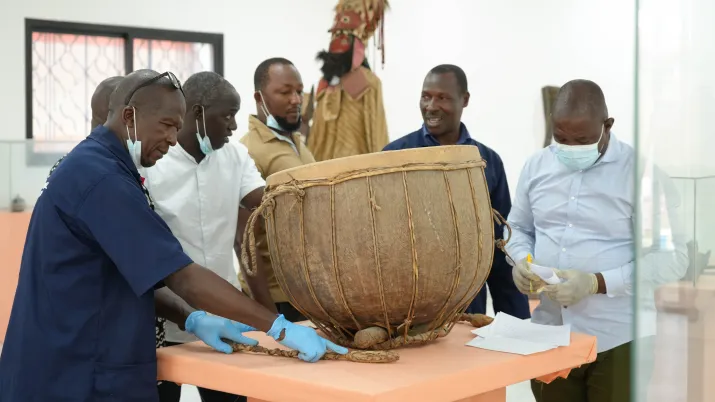
African-European Museum Partnerships
Ongoing
2025 - 2030
Funders : European Union, Agence Française de Développement, German State, Belgian State, Government of The Netherlands

Africa-Europe Partnerships for Culture: Audiovisual sector
Ongoing
2026 - 2029
Funders : European Union, German Cooperation Agency - GIZ, Ministry for Europe and Foreign Affairs of France

In the News

Greater cooperation for museums and culture in favour of heritage and living together in harmony
Published on May 11, 2026

Vietnam: The Team Europe mobilized to support innovation in the private sector
Published on February 25, 2026