Share the page
Archiving audiovisual records and architectural cultural heritage
Published on
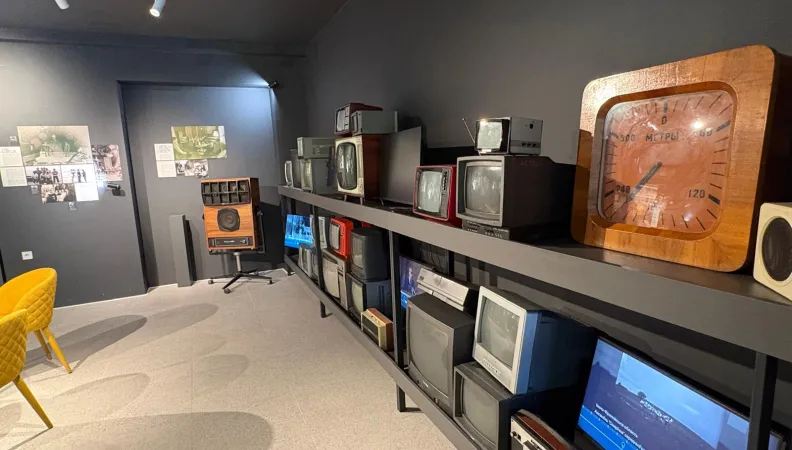
Archives play an essential role in governance, transparency and the handing down of history, as the means to safeguard historical records of states and society. And yet they are exposed to many threats, all over the world. On 9 June, International Archives Day, Expertise France highlighted its projects in favour of archive conservation worldwide.
Archives are defined as all manuscript and audiovisual documents, that have been collected and classified for consultation purposes. Archive conservation is essential not only for historical documentation but for research. And yet, this heritage remains fragile. In Africa, many archives are threatened by ill-suited conservation conditions, a lack of equipment and the growing effects of climate disruption. In conflict zones, the risks of destruction endanger part of the nation’s historical records. Rising to these challenges, Expertise France provides support for its partners to protect, modernise and promote their archives, thus helping to preserve a heritage that’s essential to national resilience and the handing down of their history.
Support for an archive digitisation policy for the island state of Mauritius
The Mauritian archipelago boasts one of the oldest archive departments in the southern hemisphere. Officially founded in 1815 under British colonial rule, the National Archives of Mauritius now house nearly 300 years of documents retracing the nation’s political, social and economic history. Given growing viewing needs and risks of deterioration for original documents, modernising the archive system had become a national priority. The National Archives have already digitised over 530,000 documents and developed an electronic archive platform accessible to Mauritian and international research workers.
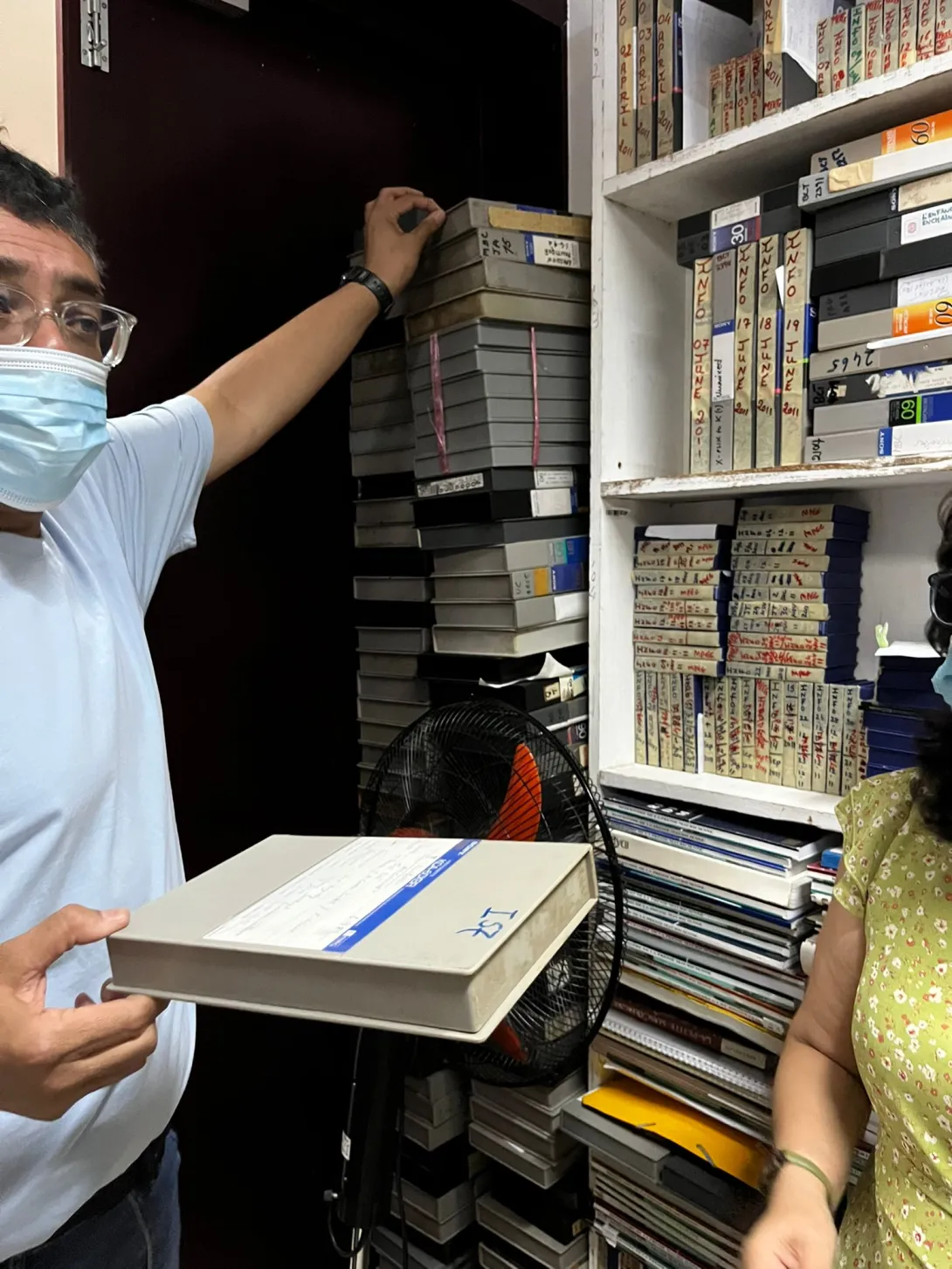
The Mauritius Broadcasting Corporation (MBC) was founded in 1944. This national broadcasting corporation also plays the role of safeguarding, digitising and promoting Mauritius’ audiovisual records.
However, local archivists at the MBC are now facing a glaring lack of resources.
In the absence of a properly organised archiving strategy, to index, classify and manage audiovisual documents archives in particular, archiving work has gradually gained in complexity.
In response, Expertise France started supporting the MBC in 2025, by way of a 2-year, €1-billion Team France Fund, funded by the French Ministry for Europe and Foreign Affairs.
The project aims to draft and implement a lasting strategy to manage and classify audiovisual records, with technical support from the French audiovisual institute (INA). Further to a diagnosis of MBC’s archiving policy for audiovisual works and documentation, the goal is to develop a vast project combining a training school and initiatives to help with documentation, indexation and audiovisual archive management. These training courses will factor in the new documentary policy tailored to the MBC’s specific needs.
Digitising and archiving architectural heritage in Ghana
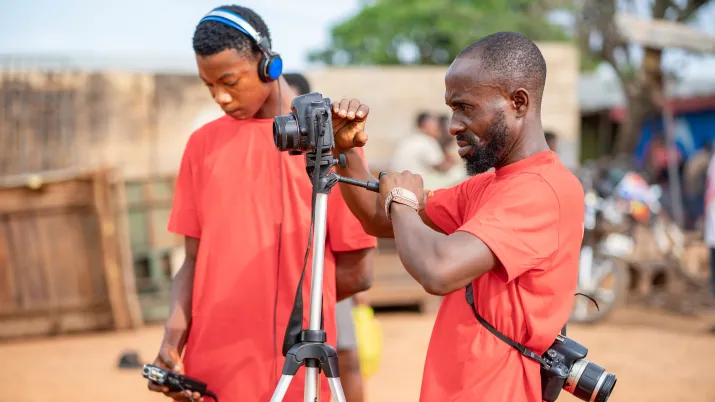
The Ghana Museums and Monuments Board (GMMB) handles Ghanaian monuments nationwide, especially the 28 forts and castles dotted across the land.
The EU-funded SANKOFA IIproject (worth 2.5 billion euros) is being implemented by Expertise France over a 36-month period starting in early 2026, to support this and other public establishments, continuing on from an initial project SANKOFA I funded by the French Ministry for Europe and Foreign Affairs which aimed to build capacity in terms of heritage preservation, research and the development of tourism geared around Ghana historic sites and culture.
The project aims to better conserve and sustainably manage Ghana’s historic heritage, by setting up a programme of technical documentation for forts, castles and heritage buildings. This initiative covers inventory, collecting, classifying and digitising existing archives (plans, reports, photographs and historic documents), as well as producing architectural measurement and digital models. The Ghana Museums and Monuments Board (GMMB) is to be endowed with a specialist laboratory, ArchLab, with the remit of centralising archives, training young professionals and building the nation’s capacity in terms of documenting heritage. The project will also produce comprehensive architectural documentation for at least one priority heritage site, as a solid foundation for future initiatives to conserve, restore and promote Ghanaian heritage.
Safeguarding audiovisual records in wartime in Ukraine
The Ukrainian Public Broadcasting Company, Suspilne, has been confronted with major challenges to preserve and manage its vast collection of audiovisual archives. Containing documents dating from the 1950s to the present, this collection is an important resource for insights into Ukrainian history, culture, politics and society. With the massive Russian invasion the situation has now become an emergency, especially regarding war archives conserved in regions subjected to intensive bombing. Looking beyond their cultural value, these archives now are of legal importance, since Suspilne was designated in 2022 as the official depositary of documents relative to war crimes, adding a legal dimension to their conservation and organisation. Given the current situation, public trust in institutions and the media is vital. This is why Suspilne intends to strengthen its image as the guardian of public archives.
The Suspilne team expressed the need for training on European standards and French content in order to better cater to its specific requirements. France has solid complementary expertise regarding the management of war archives, archive conservation, digitisation, governance pertaining to metadata and public broadcasting. Institutions such as the École national des Chartes (ENC), the French audiovisual institute (INA), the Établissement de communication et de production audiovisuelle de la Défense (ECPAD), the French Centre of Cinema (CNC), the Bibliothèque nationale de France (BnF) and the National Archives all brought their expertise in their respective fields.
A study tour was thus organised from 18 to 22 May 2026 as part of the Expertise France project running in 2025 and 2026 funded by the French Ministry for Europe and Foreign Affairs via mAIDan. Ten Suspilne Mediateka workers, including the director Taisiia Turchyn, audiovisual content managers Anna Skrypka, the archivists and community managers, received training from INA and BnF experts in Paris. This training course was designed to support the transition from managing archives towards the production of content based on archives. Previous efforts had focussed on conservation, digitisation and legal frameworks, while the current priority is to leverage these war crime archives as a resource to produce content, engage the public and publish digital content.
The project thus aims to strengthen skills in terms of drafting and narration as well as adapting content to digital platforms and social media.
A demonstration and walk-through of the BnF’s French platform Gallica, containing several million digital archive documents, helped the trainees get to grips with European standards, while adapting the exercises to Suspilne’s own archives.
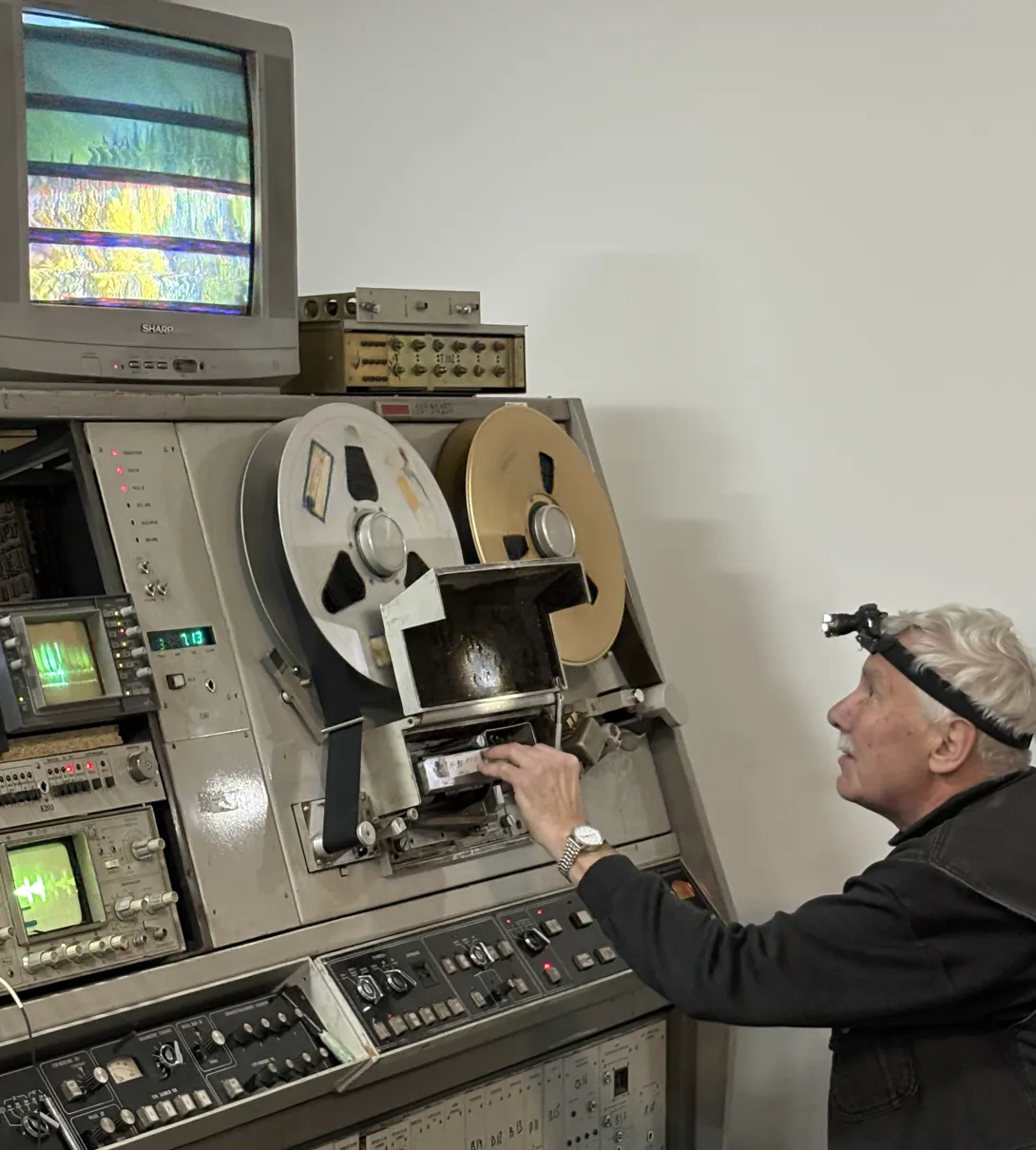
Screening films from 1940 to the present in Iraq
The 2024-2026 Iraqi Film Library project with 1 billion euros in funding from French Ministry for Europe and Foreign Affairs, has already chalked up an achievement with the completed restoration in 2025 of the 1957 film Saïd Effendi, which enjoyed a second moment of glory at the Cannes Classic Film Festival.
This Expertise France project is now aiming even higher, training Iraqi professionals in diagnosis, inventory, restoration and digitisation of archives for many Iraqi films with a view to promoting the nation’s cultural history.
Three Iraqi professionals thus took part in an intensive 2-week training course run by INA in September 2025. Today, in 2026, their takeaways are proving invaluable at the Iraqi Film Library’s laboratory in Baghdad as they work under the supervision of an agency expert.
As a demonstration of confidence and the successful sharing of experience, the Committee for Iraqi Visual Memory recently announced the creation of a centre dedicated to preserving film and audiovisual archives. Expertise France will help it develop and forge connections with international archive protection networks.
In the same spirit, the teams from the Iraqi Film Library project took part in the International Federation of Film Archives’ (FIAF) international congress in April 2026, on the theme of “Reimagining African and Arab Film Memory: Methodologies, Collaborations, Restitutions, and Dialogues”.
The long-term goal is to be able to continue to develop ties with other partner institutions, especially with the French Centre of Cinema (CNC), which regulates the audiovisual market as well as promoting records of the past.
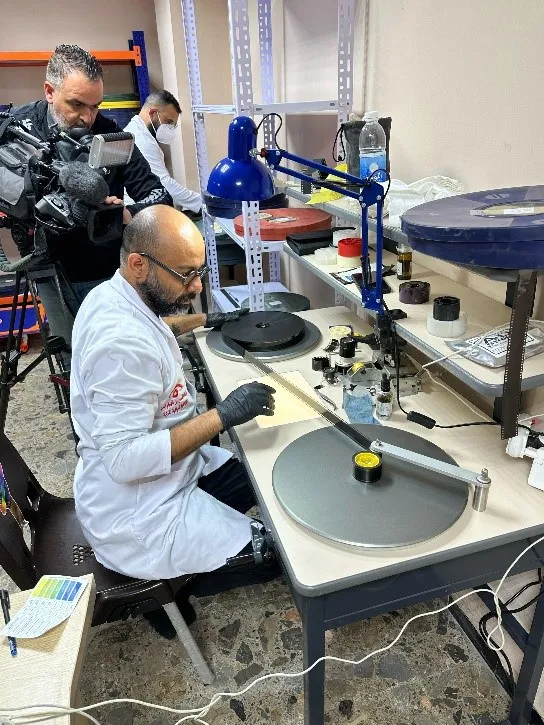
In the news
Greater cooperation for museums and culture in favour of heritage and living together in harmony
Published on May 11, 2026
Building a “Shared Horizon” for youth in the Balkans and countering misinformation
Published on September 29, 2025
On the same topic
Virtual Museum of Guinea
Ongoing
2025 - 2026
Funders : Ministry for Europe and Foreign Affairs of France
African-European Museum Partnerships
Ongoing
2025 - 2030
Funders : European Union, Agence Française de Développement, German State, Belgian State, Government of The Netherlands
Africa-Europe Partnerships for Culture: Audiovisual sector
Ongoing
2026 - 2029
Funders : European Union, German Cooperation Agency - GIZ, Ministry for Europe and Foreign Affairs of France