Share the page


Support for the Covenant of Mayors for Sub-Saharan Africa (CoM SSA)
Project
Published on

-
Project start date
-
Status
Ongoing
-
Project end date
-
-
Financing amount (Euro)
-
4.2m
-
Country and region
-
Côte d'Ivoire, Uganda, Togo, Africa


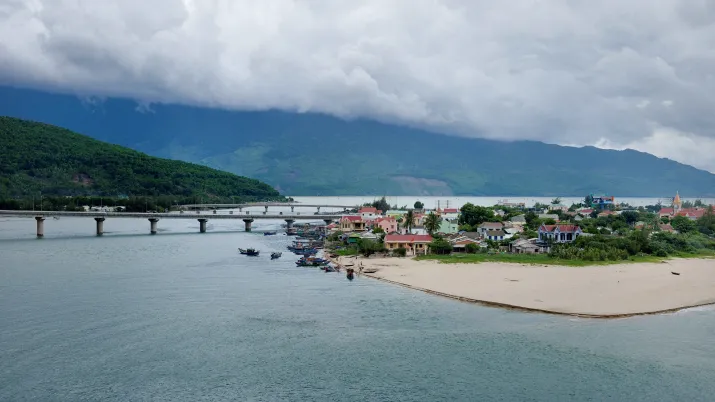
The aim of the EU-funded project to support the Covenant of Mayors for Sub-Saharan Africa is to assist signatory cities in planning and implementing their climate and energy initiatives.
Sharp urban growth in sub-Saharan Africa
By 2050, sub-Saharan Africa’s urban population is projected to grow by 950 million to reach 1.26 billion people (source: World Bank, Cities Key to Solving Climate Crisis, 2023). The rapid growth of sub-Saharan cities raises a number of pressing issues for the people of Africa, particularly in terms of climate-change mitigation and adaptation, and of access to affordable, reliable and sustainable energy.
The “Covenant of Mayors in Sub-Saharan Africa” (CoM SSA) is an initiative inspired by the “EU Covenant of Mayors” and funded by the European Union. It supports cities in sub-Saharan Africa in their fight against climate change and in their efforts to ensure access to clean energy for their residents.

CoM SSA, the regional chapter of the Global Covenant of Mayors
CoM SSA is one of the regional chapters of the Global Covenant of Mayors for Climate and Energy, the world’s leading initiative by cities and local authorities on climate and energy.
From 12 September 2017, the process for joining the CoM SSA has been open to all African cities, which can thereby contribute to the joint effort to fight climate change and reduce greenhouse gas emissions.
The Covenant of Mayors for Sub-Saharan Africa and its city-oriented activities have the following objectives:
- Bolster cities’ capacity to develop and use planning and implementation tools in the fields of energy, mobility and urban planning
- Improve legal and institutional frameworks for local authorities as well as their technical and resource-mobilisation capacities
- Promote the political ownership and dissemination of best practices.
2015–2024: promoting the mainstreaming of climate issues into city policies
The initial phases of CoM SSA were carried out between 2015 and 2024. They helped give impetus to the mainstreaming of climate issues into urban planning in sub-Saharan African cities. Their achievements included the following:
- Creation of a strong network of cities committed to fighting climate change, comprising 178 cities and local authorities
- Development, mainstreaming and evaluation of action plans for sustainable energy access and climate action
- Investments in sustainable energy and climate action
- Support for regional cooperation, learning and the exchange of knowledge.
2025–2028: a fourth phase to strengthen local impact
The regional chapter of the Covenant of Mayors in Sub-Saharan Africa is now in Phase 4, which is building on the previous ones but with a focus on funding and project implementation.
Phase 4 seeks to increase the impact of the initiative’s actions and, more specifically, to unlock opportunities for climate finance at the local level. It is implemented jointly by four development cooperation agencies: AECID, AFD, Expertise France and GIZ.
Expertise France is implementing its support in Côte d’Ivoire, Uganda and Togo, on three main areas of action:
1. Improving participatory and gender-sensitive planning and the identification of climate-change mitigation and adaptation measures
Our project is supporting actions to assess local projects and plans relating to climate and energy issues in each of the partner cities and local authorities. The goal is to help:
- develop the Sustainable Energy Access and Climate Action Plan(SEACAP); and
- conduct further studies aimed at strengthening the existing plans.
This component also includes a capacity-building plan for local authorities, based on a prior-needs assessment.
2. Increasing investment in climate-change adaptation and mitigation
An assessment of decentralisation and climate-related challenges will be carried out in order to help:
- strengthen the link between national policy guidelines and local circumstances;
- identify, at an early stage, possible sources of funding for SEACAP implementation;
- provide guidance on sectoral studies in order to obtain data on key issues relating to the SEACAPs;
- empower local authorities in fighting climate change by implementing pilot projects.
3. Promoting the implementation of climate action in urban areas
With this final area of focus, we are concentrating on strengthening networking and cooperation between the signatory cities at the national level.
We also help organise workshops and sessions for cities and local authorities to share experiences at the national level, as well as discussions aimed at bolstering dialogue between local authorities and national institutions.
The CoM SSA-4 implementation approach
Implementation of the CoM SSA-4 project relies on a participatory approach based on co-development with the implementing partners including:
- establishment of memoranda of understanding with local authorities and an implementation agreement with the partner ministry;
- support for identifying and prioritising needs;
- needs assessment and development of roadmaps; and
- establishment of grants.
Sustainable Development Goals
SDG7 - Affordable and clean energy
Ensure access to affordable, reliable, sustainable and modern energy for all
SDG11 - Sustainable citites and communities
Make cities and human settlements inclusive, safe, resilient and sustainable
SDG13 - Climate action
Take urgent action to combat climate change and its impacts
Similar projects
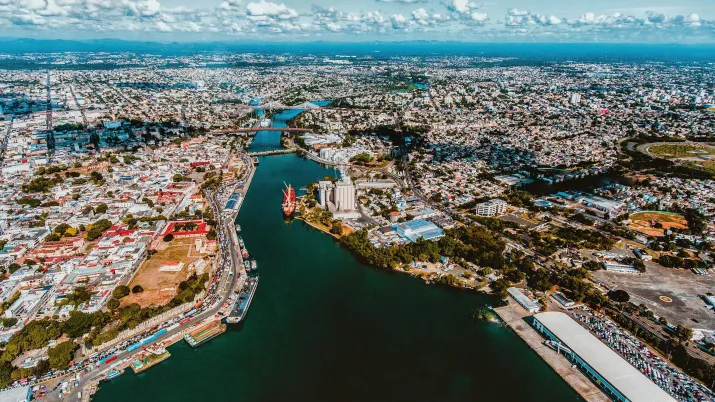
FIMUS – Promoting sustainable urban mobility in the Dominican Republic
Ongoing
2025 - 2029
Funders : Agence Française de Développement
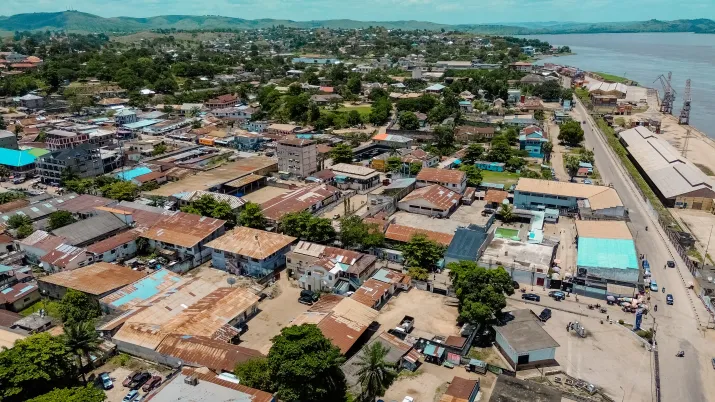
Support for Boma’s Urban Transformation
Ongoing
2025 - 2028
Funders : Agence Française de Développement

In the news
From National Framework to Local Action: supporting the transformation of waste management in Cameroon
Published on September 21, 2026
Supporting cities and the industrial sector in the face of the global climate challenge
Published on November 12, 2025
In Southeast Asia, providing long-term support to the circular economy, health and security
Published on October 6, 2025