
Share the page

EU4SUN - Support to make the SUN 3.0 Nutrition Strategy operational
Project
Published on
-
Project start date
-
Status
Ongoing
-
Project end date
-
-
Financing amount (Euro)
-
6.4m
-
Country and region
-
Benin, Botswana, Cameroon, Comoros, Côte d'Ivoire, Costa Rica, Djibouti, Ecuador, Ethiopia, Gabon, Gambia, Ghana, Guatemala, Guinea, Haiti, Honduras, Kenya, Lesotho, Liberia, Madagascar, Malawi, Mauritania, Mozambique, Namibia, Uganda, Panama, Peru, El Salvador, Senegal, Sierra Leone, Swaziland, Tanzania, Chad, Togo, Zambia, Zimbabwe, Africa, The Americas
-
Funders
-
Partners


EU4SUN supports some 30 countries in Africa, Latin America, and the Caribbean to improve nutrition over the long term, via support aligned with the priorities set by each country.
Nutrition: a global health challenge with multiple causes, which calls for a multisectoral response
Even though the planet has never produced so much food, malnutrition continues to affect billions of people. Malnutrition is not limited to hunger: it encompasses all forms of nutritional imbalances, such as undernutrition, micronutrient deficiencies, overweight and obesity.
733 million people are undernourished
Nearly 733 million people are undernourished, while one in eight people worldwide are obese, and at least 1.6 billion women and young children suffer from a deficiency in essential vitamins and minerals (WHO, 2022). Behind this paradox is a severe nutritional crisis that is unevenly distributed and has major consequences for development.
In many countries, this crisis takes the form of a dual burden of malnutrition. On the one hand, undernutrition and deficiencies curb the physical and cognitive development of children, and, on the other, there is a surge in overweight, obesity, and the related diseases linked to change in eating patterns. The repercussions go far beyond individual health. Poor nutrition reduces productivity, weighs down health systems, and stifles sustained economic growth, thereby contributing to the perpetuation of inequality and the cycle of poverty.
Malnutrition is not simply the result of a lack of food. It’s the result of a combination of multiple intertwined factors: food insecurity, care practice, cultural factors, and others.
To address this complex situation, responses must be multisectoral and coordinated across various sectors: health, agriculture, water and sanitation, education, social protection, and governance. This multisectoral approach to nutrition, initiated by the United Nations Scaling Up Nutrition (SUN) movement, requires coordination among public, community, humanitarian and private-sector actors, as well as coherent national policies and sustainable financing. This is the approach that the EU4SUN project aims to support, through both its design and its implementation.
EU4SUN: addressing the specific needs of countries by mobilising key actors
EU4SUN supports some 30 countries in Africa, Latin America and the Caribbean in implementing the SUN Movement’s 3.0 strategy. Its goal is to improve nutrition on a sustainable basis via support aligned with the priorities set by each country.
The main objective of the project is to help increase and improve nutrition actions, with a focus on:
- operationalising the multisectoral approach to nutrition;
- identifying and sharing regional nutrition priorities;
- building national capacities for actions to improve people’s nutritional status;
- improving national and regional governance systems for nutrition.
The project’s actions are deployed at two levels: 1) prioritising the leadership of member countries and their national priorities to initiate systemic changes and 2) carrying out regional initiatives that encourage cooperation and the sharing of experiences between countries.
Its agile and flexible approach makes it possible to determine and adjust actions over time to meet the specific needs of partner countries and the SUN movement. This inclusive model mobilises all stakeholders (governments, civil society, youth, international partners, and the private sector) to develop sustainable and appropriate solutions to nutrition challenges. In this way, we carry out actions for boosting national capacities, improving normative and policy frameworks, and conducting advocacy. The project also makes it possible to create spaces for multi-stakeholder dialogue at the national and regional levels to initiate discussions on nutrition policies.
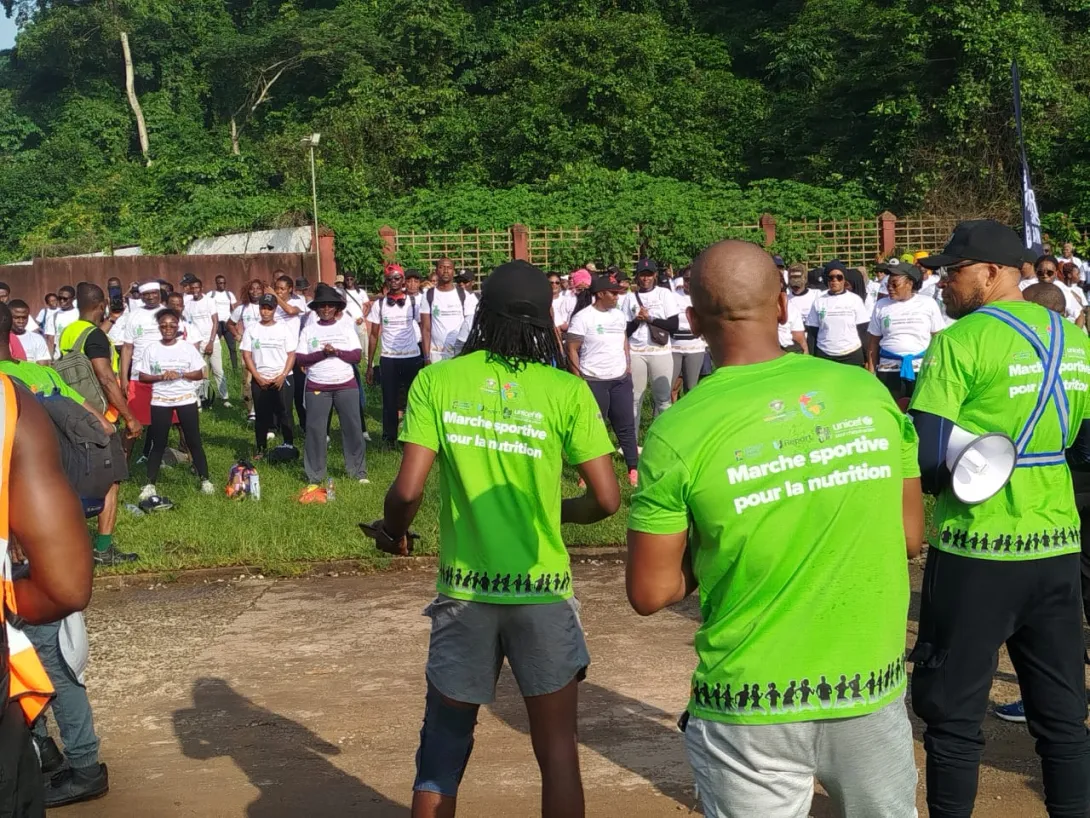
Concrete actions to strengthen nutrition in partner countries
The project is being implemented jointly by Expertise France and the Spanish cooperation agency FIAP. Many technical assistance actions have been implemented to achieve the objectives and meet the needs expressed by partner countries. The actions implemented by Expertise France include:
- support for youth networks for nutrition: capacity-building, development of budgeted advocacy and communication plans, coordination of actions related to national policy;
- support for the development of policies for taxation on unhealthy food: feasibility study, stocktaking, and impact assessment;
- mapping of nutrition stakeholders and creation of national platforms on nutrition information;
- evaluation and development of multisectoral nutrition plans;
- calculation of the “cost of malnutrition”: analysis of the cost, for States, of not taking action against malnutrition, and identification of priorities for action;
- capacity-building for monitoring nutrition spending and for integrating nutrition into country strategy papers;
- technical support to countries to assess and develop their commitments as part of the Nutrition for Growth (N4G) 2025 Summit;
- development of online training dedicated to civil society actors, to strengthen the accountability, monitoring, and evaluation of nutrition actions.
N4G: a key driver for promoting nutrition
The Nutrition for Growth (N4G) summits are a unique opportunity to bring nutrition advocacy to the highest level. As the sole summits entirely dedicated to this theme, they offer a unique accountability framework that ensures rigorous, transparent, and public monitoring of the commitments made.
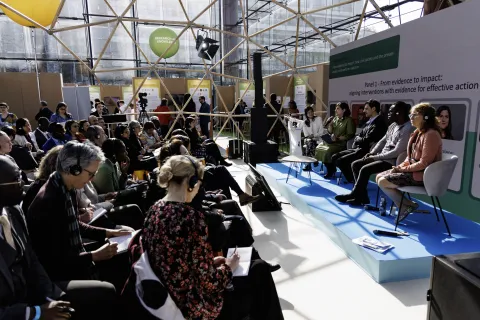
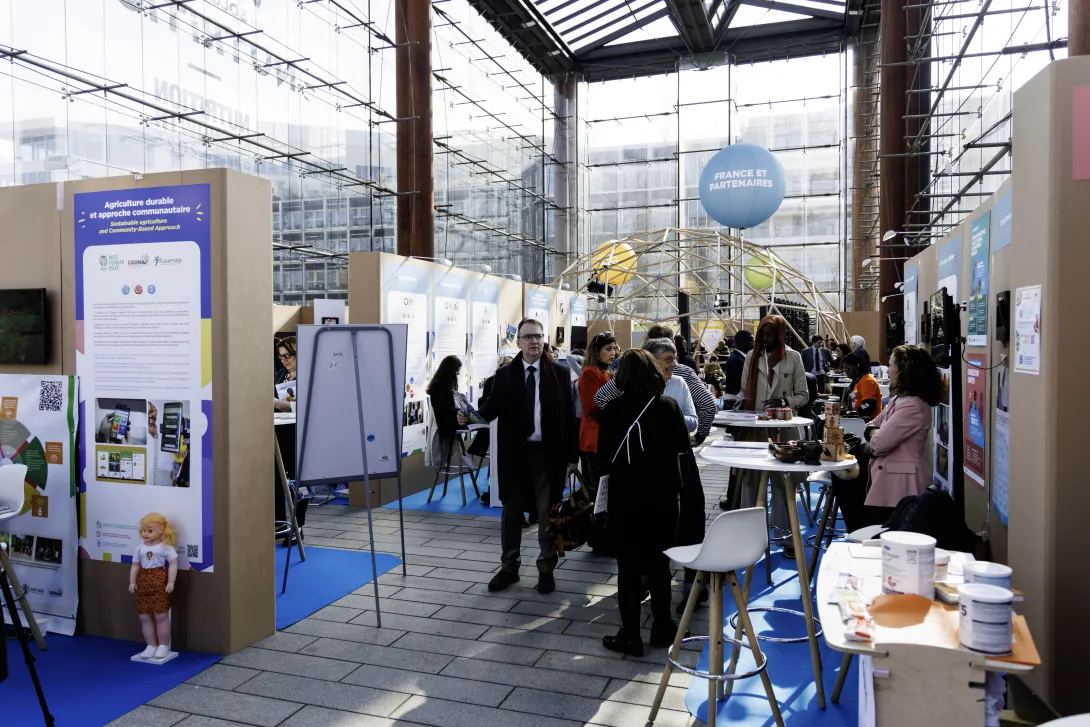
The EU4SUN project helped mobilise some 30 States in Latin America and Africa during the N4G 2025 summit, which was held in Paris with the goal of promoting the adoption of ambitious commitments on nutrition, their monitoring, and their implementation. Our actions have been part of every step of the process:
 © Guillaume Landry
- support for countries in monitoring and evaluating the implementation commitments made in 2021;
- guidance in developing SMART (Specific, Measurable, Achievable, Realistic and Timebound) commitments for the 2025 summit;
- design and implementation of the Village of Solutions for Nutrition during the N4G 2025 summit;
- technical support for States in implementing their commitments.
The N4G 2025 summit made it possible to formalise commitments for nutrition from 75 countries, with unparalleled total financial commitments of $27 billion.
Sustainable Development Goals
SDG2 - Zero hunger
End hunger, achieve food security and improved nutrition and promote sustainable agriculture
SDG3 - Good health and well-being
Ensure healthy lives and promote well-being for all at all ages
On the same topic
Supporting the Creation of the “Armenian Brandy” Geographical Indication
Ongoing
2024 - 2026
Funders : European Union
Structuring the AI Sector in the Mediterranean
Ongoing
2025 - 2027
Funders : Ministry for Europe and Foreign Affairs of France
In the news
Agriculture | “We’ve targeted family farming because it’s everywhere and it’s essential”
Published on February 28, 2024