Share the page

African-European Museum Partnerships
Project
Published on
-
Project start date
-
Status
Ongoing
-
Project end date
-
-
Financing amount (Euro)
-
19.9m
-
Country and region
-
Africa, South Africa, Angola, Benin, Botswana, Burundi, Cameroon, Cape Verde, Comoros, Congo, Côte d'Ivoire, Djibouti, Eritrea, Ethiopia, Gabon, Gambia, Ghana, Guinea, Guinea-Bissau, Equatorial Guinea, Kenya, Lesotho, Liberia, Madagascar, Malawi, Mauritius, Mauritania, Mozambique, Namibia, Nigeria, Uganda, Central African Republic, Democratic Republic of the Congo, Rwanda, São Tomé and Príncipe, Senegal, Seychelles, Sierra Leone, Somalia, Sudan, South Sudan, Swaziland, Tanzania, Chad, Togo, Zambia, Zimbabwe, Europe, Germany, Austria, Belgium, Bulgaria, Cyprus, Croatia, Denmark, Spain, Estonia, Finland, France, Greece, Hungary, Ireland, Italy, Latvia, Lithuania, Luxembourg, Malta, Netherlands, Poland, Portugal, Czech Republic, Romania, Slovakia, Slovenia, Sweden
-
Funders
-
Partners

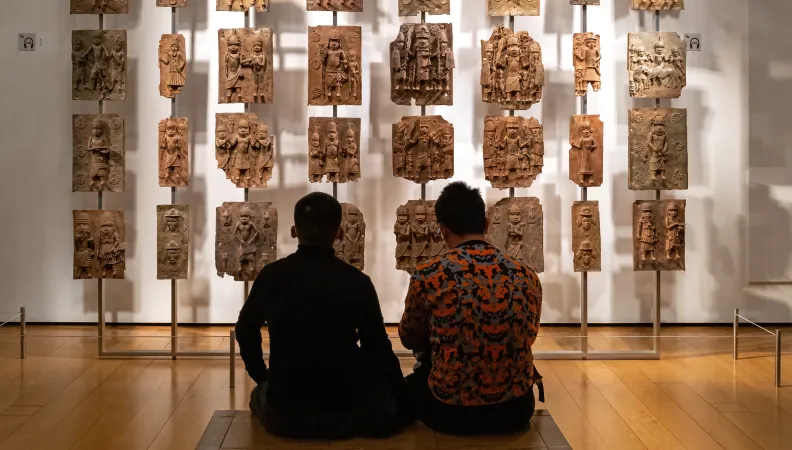
The “African-European Museum Partnerships” initiative strengthens partnerships between museums and cultural and academic institutions in Africa and Europe. With a focus on museum exhibitions, collections, and public engagement, the project combines funding, technical expertise, training and mobility.
A partnership born out of dialogue between African and European museums
The idea for the African-European Museum Partnerships emerged from professional discussions held in Berlin in 2022 between African and European museum directors. In April of the following year, 60 museum directors from 28 African countries and 12 European countries gathered in Dakar for a workshop issued the “Declaration of Dakar”. Through this declaration, they expressed their shared ambition to create greater opportunities for cooperation and knowledge-sharing and to build sustainable partnerships between African and European institutions – partnerships that go beyond mere bilateral relations and requests for the return of cultural property.
The initiative is funded by the European Union, with additional contributions from France, Germany, the Netherlands and Belgium. Its total budget is €19.9 million. Expertise France and the Goethe-Institut are implementing the initiative using an “Africa-Europe Team” approach. Its official launch took place on 28 April 2026, at the African Union headquarters in Addis Ababa.
Find out more about the Declaration of Dakar
Three pillars to sustainably bolster museums
The project is based on three complementary pillars.
- The Exhibitions pillar supports more sustainable, innovative, inclusive and replicable exhibition practices, as well as the renewal of narratives and outreach.
- The Collections pillar works to improve the conservation, cataloguing, documentation and gradual digitisation of collections, taking into account the actual capabilities of the museums.
- The Empowerment pillar involves ownership and engagement by the public. Its aim is to boost the museum’s social role by encouraging participation by young people, women, schools, universities, communities and civil society.
The initiative pursues two key objectives via these three pillars: (i) strengthen cultural cooperation between the European Union and Africa, as well as among African countries, and (ii) promote African cultural heritage as a means for social cohesion, stability, cultural tourism, employment and sustainable growth.
Pillar 1- Exhibitions: sharing narratives, practices and partnerships
The Exhibitions pillar is one of the main areas for experimentation within the African-European Museum Partnerships. Its goal is to support museums in designing and putting into service more sustainable, innovative, inclusive and replicable exhibition formats, while at the same time promoting the renewal of narratives, the circulation of knowledge and dialogue between African and European institutions.
Four calls for proposals are planned under this pillar, for sustainable and innovative exhibitions, flagship exhibitions and onsite training centres, replicable exhibitions, and exhibitions that engage with civil society.
The funding is to be supplemented by tools to support technical assistance, mobility and peer-to-peer exchanges, capacity-building and the sharing of best practices. This will help the museums develop ideas into technically sound projects that are rooted in their local context and that can be replicated in other places.
The Declaration of Dakar sees these activities as a way to make exhibitions a cultural product as well as opportunities for cooperation, research, knowledge-sharing and co-creation among museums, artists, researchers, schools, communities and civil society organisations.
Pillar 2 – Collections: learning about, protecting and passing on cultural heritage
The Collections pillar addresses the fundamental challenge of enabling museums to better learn about, document and conserve theircollections, as well as of making them accessible. This is done by drawing on professional standards, solutions that match the realities of African institutions, and more sustainable approaches to cultural heritage management.
Two calls for proposals are planned: (i) sustainable conservation and collection catalogues and (ii) digital tools for collections.
In addition to funding projects, we are setting up mechanisms for specialised technical assistance, training, professional mobility, exchange of expertise and development of methodological tools. These will support museums with their varied needs of inventorying, documentation, preventive and restorative conservation, digitisation, collection management and application of local knowledge in conservation practices.
The goal is to turn the collections into a dynamic foundation for knowledge, research and knowledge-sharing by strengthening the capacity of institutions and fostering collaboration between African and European professionals, all the while ensuring that the proposed solutions are technically sound and sustainable in the long term.
Pillar 3 – Empowerment (ownership and engagement): opening museums, boosting capacities and expanding participation
As part of the Empowerment pillar, we focus on museums’ ability to become spaces that are more open and participatory places with stronger connections to society.
Two calls for proposals will be launched in this framework: (i) museum outreach and visitor engagement and (ii) academic cooperation and new partnerships. Their focus is to support initiatives involving young people, women, schools, universities, communities, civil society, artists and other local stakeholders.
We are also putting into motion programmes for training and skills development, mobility, technical assistance, peer-to-peer exchanges and networking, with a view to consolidating outreach practices, developing new forms of participation and fostering sustainable partnerships among museums.
As well as building professional capacity, we are supporting museums in listening to, engaging in dialogue with, and working collaboratively with their visitors, and in forging new relationships with them. This approach contributes directly to the ambition set out in the Declaration of Dakar to make museums key players in cultural cooperation, social cohesion, cultural diversity and the transmission of knowledge across generations.
Shared governance that’s strategic, technical and multi-stakeholder
The initiative uses a “Team Africa-Europe” approach based on dialogue and led by high-level professionals from African and European museums. Partnerships and co-creation are the main pillars of the activities, and these will be boosted by the setting up of two governance bodies:
- An Africa-Europe Strategic Committee approves the initiative’s overall political and strategic guidelines. It is made up of representatives of (i) the African Union Commission and four invited member states forming the bureau of the Specialised Technical Committee on Youth, Culture and Sport (the Democratic Republic of the Congo, Ghana, Mozambique and the Seychelles); (ii) the European Commission, represented by the European Union Delegation to the African Union; and (iii) the contributing EU Member States (Belgium, Germany, France and the Netherlands).
- An Africa-Europe advisory council promotes a concrete “Team Africa-Europe” approach. It is made up of members of the committee of museum directors set up to monitor the implementation of the Declaration of Dakar, African training institutions and international organisations.
This governance framework seeks to ensure that implementation remains aligned with the sector’s needs and the spirit of the Declaration.
Sustainable Development Goals
SDG4 - Quality education
Ensure inclusive and equitable quality education and promote lifelong learning opportunities for all
SDG5 - Gender equality
Achieve gender equality and empower all women and girls
SDG8 - Decent work and economic growth
Promote sustained, inclusive and sustainable economic growth, full and productive employment and decent work for all
SDG11 - Sustainable citites and communities
Make cities and human settlements inclusive, safe, resilient and sustainable
SDG17 - Partnerships for the goals
Revitalize the global partnership for sustainable development
On the same topic
Virtual Museum of Guinea
Ongoing
2025 - 2026
Funders : Ministry for Europe and Foreign Affairs of France
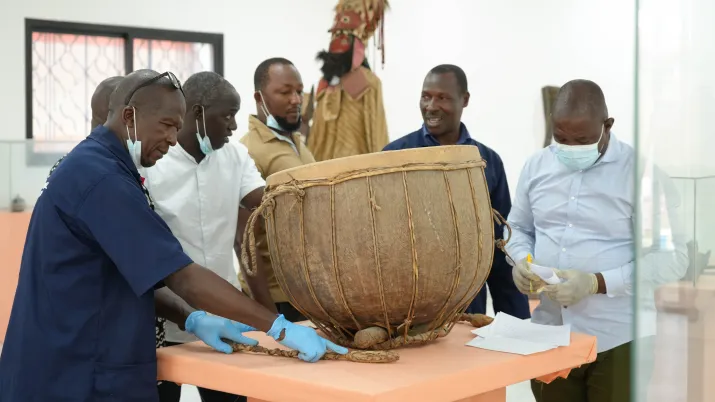
Africa-Europe Partnerships for Culture: Audiovisual sector
Ongoing
2026 - 2029
Funders : European Union, German Cooperation Agency - GIZ, Ministry for Europe and Foreign Affairs of France
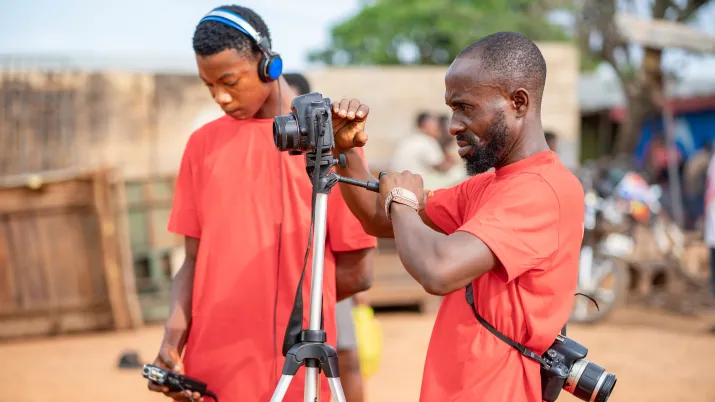
HERITRACE - Strengthening the fight against trafficking in cultural property
Ongoing
2026 - 2029
Funders : European Union
In the news
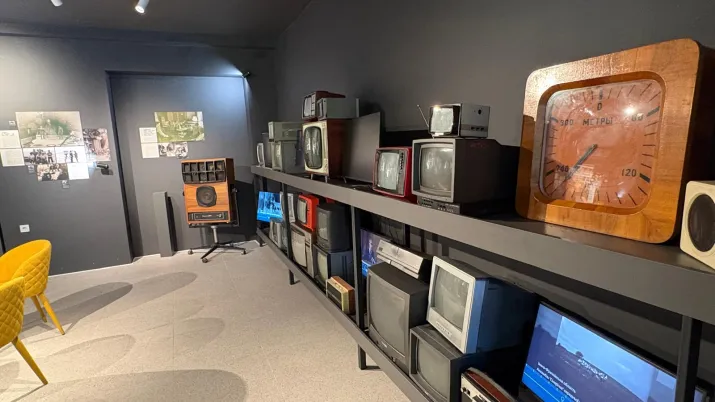
Greater cooperation for museums and culture in favour of heritage and living together in harmony
Published on May 11, 2026
Building a “Shared Horizon” for youth in the Balkans and countering misinformation
Published on September 29, 2025