Share the page

EU CRIMARIO – Project to strengthen maritime safety and security
Project
Published on
-
Project start date
-
Status
Ongoing
-
Project end date
-
-
Financing amount (Euro)
-
8m
-
Country and region
-
Saudi Arabia, Argentina, Bahrain, Bangladesh, Brazil, Chile, Colombia, Comoros, Djibouti, Egypt, Ecuador, Ethiopia, Fiji, France, Guam, Indonesia, Jordan, Kenya, Kiribati, Madagascar, Malaysia, Maldives, Malta, Mauritius, Mozambique, Nauru, Niue, New Caledonia, New Zealand, Oman, Palau, Panama, Papua New Guinea, Peru, Philippines, French Polynesia, United Kingdom, Samoa, Seychelles, Somalia, Sudan, Sri Lanka, Tanzania, Thailand, Tonga, Tuvalu, Uruguay, Vanuatu, Vietnam, Wallis and Futuna, Yemen, Federated States of Micronesia, Cook Islands, Marshall Islands, Solomon Islands, Africa, The Americas, Asia and the Pacific, Europe, Middle East
-
Funders

CRIMARIO is an EU-funded project which aims to strengthen international cooperation on maritime safety and security by enhancing maritime domain awareness through information sharing, capacity building and improved coordination between maritime agencies.
2015-2019: The European Union commits to securing maritime areas in the Indian Ocean
Launched in 2015, EU CRIMARIO is an EU-funded initiative, which aims to support partner countries from the Western Indian Ocean in securing their maritime areas. It includes activities such as information sharing, capacity building and training, with a focus on Maritime Domain Awareness.
The project aims to strengthen cooperation and complementarity between the national maritime operations centres of more than 50 countries, regional information fusion centres (IFCs), joint operations and coordination centres, as well as regional organisations such as the Djibouti Code of Conduct and the Indian Ocean Commission.
2020-2025: The project’s geographical reach is extended to improve crisis management
In 2020, the EU CRIMARIO project was extended for five years to improve crisis management and strengthen inter-agency cooperation especially in investigation and judicial matters. The scope of the project increased to the whole Indopacific region, South and South-West Asia, the Pacific and Latin America. It falls within the EU’s strategy for cooperation in the Indo-Pacific, passed in 2021, and promotes an open, inclusive and rules-based region, the respect of international law, freedom of navigation and multilateralism.
Major results were reached thanks to the creation of the IORIS platform, a neutral web portal for maritime cooperation, communication and coordination (MarCo3) launched in 2018. This platform strengthens collaboration at the national, regional and international levels and comes with in-depth training programmes on the processing of maritime data.
2025-2028: a third phase for sustainable results
In August 2025, a new 30-month phase was launched to consolidate the project in the long term and ensure the sustainability of the IORIS platform.
It includes a maritime exercises programme for national and regional organisations. Participants are exposed to realistic scenarios to test procedures, identify capacity gaps and improve Standard Operational Procedures, while strengthening trust between cross-border actors.
Moreover, national thematic workshops are organised with an interinstitutional approach. They gather policy-makers and practitioners on topics such as counter-narcotics, the application of maritime law, maritime safety, humanitarian assistance and disaster relief (HADR), shipping industry standards and operations, port safety, illegal unreported and unregulated fishing (IUU) and the protection of critical maritime infrastructure.
This third phase has been extended to new countries along the Atlantic Coast in South and Central America; and other partners from the Caribbean may join this cooperation over time. It will thus strengthen international cooperation on maritime safety and information sharing.
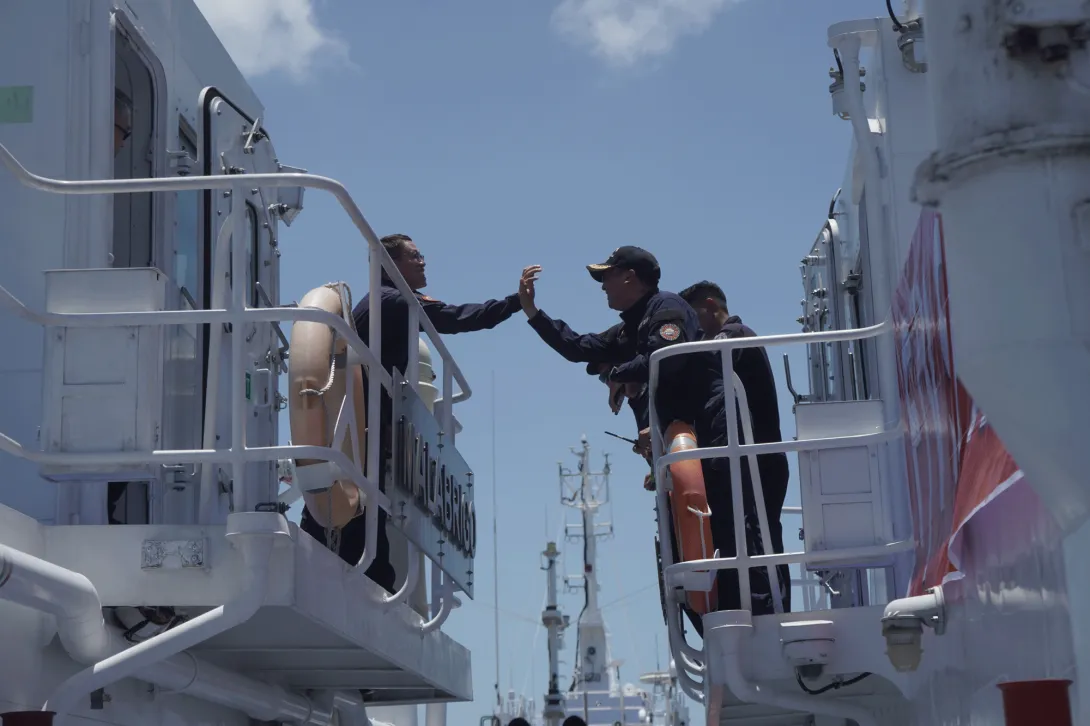
EU CRIMARIO’s main activities
To meet the objectives of EU CRIMARIO, regional partners benefits from several initiatives, which include:
- The creation of a neutral and secure web portal for information sharing and incident management: IORIS. It includes advanced mapping features to import and export vessel tracks and navigation markers to display vessels and maritime incidents in a graphic way. The vessel interception functionality identifies the optimal route and speed to intercept a vessel or a specific target. Functionalities also include messaging chat and alerts; file and form exchange; and document archiving. During this new phase of the project, an app linked to the portal will be developed to make it easier to use. The IORIS community gathers 1,700 users across 150 organisations in 50 countries.
- The organisation and participation in maritime exercises with the objective of enhancing interagency collaboration and regional cooperation. The IORIS platform is often used as the main communication tool during the exercises in conjunction with other tools.
- Tailor-made training packages designed to meet the specific needs of different countries. These trainings address Maritime Domain Awareness, including maritime search and rescue, the fight against marine oil pollution, piracy, and illegal unreported and unregulated fishing (IUU).
- SHARE.IT: This initiative aims at developing a common technological solution in order to be able to link existing information-exchange systems (such as IORIS) in a digital and secure way. This interoperability framework is established in partnership with the United Nations Office on Drugs and Crime (UNODC) and Indo-Pacific information fusion centres to develop maritime situational awareness. A community of stakeholders is set up to identify the most appropriate technological solution.
Another project to strengthen security in the Red Sea, the Western Indian Ocean and the Gulf of Aden
Within the framework of EU CRIMARIO, the Crisis Response to the Red Sea and the Western Indian Ocean project also promotes the use of the IORIS platform in the countries of the Djibouti Code of Conduct.
This 18-month Crisis Response project is funded by the European Union (€4m) and implemented by the International Maritime Organization, in partnership with the United Nations Office on Drugs and Crime and Expertise France. It aims to strengthen security in the Red Sea, the Western Indian Ocean and the Gulf of Aden, three regions where security incidents have risen lately.
Find out more
Download the project's ressources
Sustainable Development Goals
SDG8 - Decent work and economic growth
Promote sustained, inclusive and sustainable economic growth, full and productive employment and decent work for all
SDG13 - Climate action
Take urgent action to combat climate change and its impacts
SDG14 - Life below water
Conserve and sustainably use the oceans, seas and marine resources for sustainable development
SDG16 - Peace, justice and strong institutions
Promote just, peaceful and inclusive societies
On the same topic
EnMAR+ – Enhanced Maritime Action in the Gulf of Guinea, Red Sea and Western Indian Ocean
Ongoing
2026 - 2028
Funders : European Union
HERITRACE - Strengthening the fight against trafficking in cultural property
Ongoing
2026 - 2029
Funders : European Union

Digital Economy, E-Commerce, E-Payments and Public E-Services Programme (EU-EAC DEEP)
Ongoing
2025 - 2029
Funders : European Union, German State, Ministry for Europe and Foreign Affairs of France, Estonian Ministry of Foreign Affairs
In the news
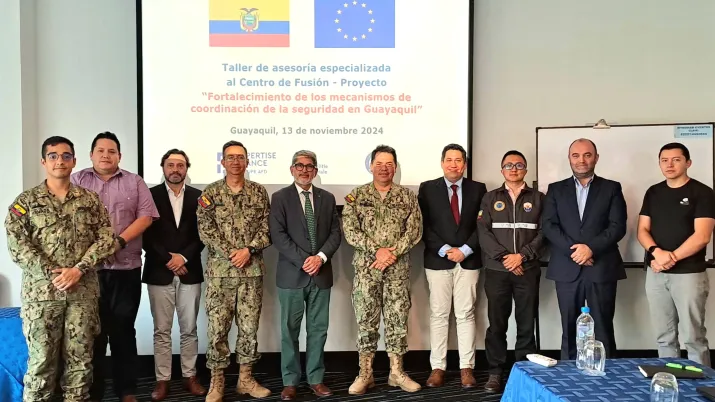
In Guayaquil, strengthening port security and intelligence to combat drug trafficking
Published on October 2, 2026
EnMAR Voices: A Podcast to Give Women a Voice in Maritime and Port Security
Published on March 10, 2026
In Southeast Asia, providing long-term support to the circular economy, health and security
Published on October 6, 2025