
Share the page
Strengthening health systems in stabilisation regions
Published on
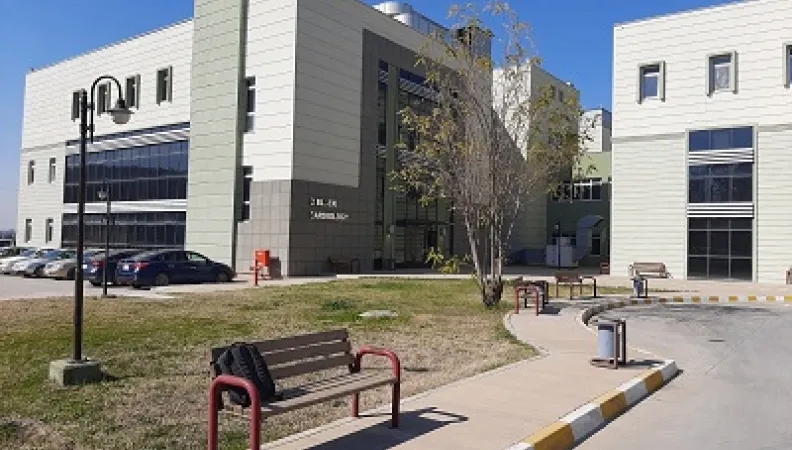
In peace zone, as well as in stabilisation zones, Expertise France takes action to strengthen the capacities of States and to improve services to their populations, especially in the healthcare system. This article presents the agency's work in North-East Syria, Iraq and Ethiopia.
For many years, Expertise France has been working with international donors and non-governmental organisations to support regions and communities affected by various conflicts. As an integral part of its DNA, the agency contributes to strengthening the capacities of States to deliver and improve services to their populations, particularly in the health sector.
This approach is most often done in peaceful areas, but can also take place in regions in crisis or fragile situations. In these cases, Expertise France implements stabilisation and recovery programmes alongside local authorities and civil society organisations in order to improve the living conditions of the population by promoting the gradual restoration of essential services and economic activity. Through the strengthening of various basic services, these programmes also aim to increase the resilience of public services and the population as a whole.
Since 2019, the agency has been present in North East Syria (NES) through the HERNES project which works to rehabilitate basic health services. A new project aimed at operationalising the Mosul medical centre in Iraq has completed the agency's work in this area and in this field since 2022. On the African continent, the project to rehabilitate the Dessie hospital in Ethiopia is a symbol of the first signs of stabilisation in the Tigray region. Focus on these three flagship projects of the agency.
Focus on these three flagship projects.
HERNES: Strengthening access to primary health care services in North East Syria
Between 2013 and 2017, a large part of the north-eastern region of Syria was affected by the Islamic State's takeover of the area and the subsequent war against it, which caused massive destruction and significantly weakened economic activity and access to basic services.
In order to support populations to recover from these years of conflict, Expertise France launched in 2019, the HERNES (HEalth Recovery in North-East Syria) project, whose objective is to support primary and secondary health services in order to strengthen the resilience of populations and medical staff in north-eastern Syria. In the first two phases, funded by the European Union and the French Ministry of Europe and Foreign Affairs (MEAE) for a total amount of €14.7m, the project has been able to rehabilitate and supply:
- three Primary Health Care Centres (PHC) ;
- three Integrated Primary Health Centres (CPHC) including maternity services
- four mobile clinics;
- a dialysis centre (HERNES 1);
- a maternity hospital.
The facilities provided an average of more than 32,000 consultations per month, the majority of which (>75%) were for women and children under five. Moreover, over 600 health care staff were trained. With the development and implementation of clinical protocols, the availability and quality of health services have been improved in the NES. Finally, the research, carried out within the framework of the programme, helped to inform the NES actors on key issues for strengthening the health system in the area.
The HERNES project continues until 2025 with a phase 3 funded by the MEAE which will focus on health sector coordination and training, particularly in the field of reproductive, maternal, new born and child health.
Maternal and child healthcare.
Mosul University Medical Research and Care Centre (MRCC) Operationalisation Project: Supporting access to health care for the population of Nineveh Governorate in Iraq
Also impacted by the conflict with the Islamic State in 2014, Iraq has been the scene of successive events that have forced millions of people to move within the country. And although the country is gradually emerging from a state of crisis, it remains very fragile and faces multiple political, economic, social and security challenges. In this context, the populations that fled during the conflict to Kurdistan and the surrounding regions have not yet returned. This situation is explained by the trauma of the Islamic State's abuses, concerns about war remnants, damaged or destroyed housing, and the lack of services, particularly in terms of health care and education.
Health infrastructure and personnel are particularly lacking in the areas most affected by the conflict (mainly the provinces of Nineveh, Anbar, Salah Al Din and Kirkuk) and the damage caused by the violence is a major obstacle to accessing health care, especially for the most vulnerable populations.
Launched at the end of 2022 and financed by the Agence Française de Développement (AFD) for a total amount of €10m, the MRCC project aims to improve the health conditions of the population of Nineveh governorate, including vulnerable populations, refugees and internally displaced persons, by providing a range of diagnostic and health care services that are currently inaccessible and by strengthening medical training with in order to achieve a national level of excellence.
By 2025, the project will:
-
ensure the rehabilitation of the MRCC building and equipment to allow the fast-start of diagnostic activities and of external consultations that are currently not available in Mosul, while ensuring the implementation of international standards. This includes the development of laboratory, medical imaging, cardiology, neurophysiology, endoscopy, urology, radiotherapy and chemotherapy activities in the medium term;
- strengthen the MRCC's institutional model for the provision of medical care, the training and research by promoting technical and scientific collaboration with French medical organisations. To accomplish this, the management of the centre must be supported at all levels.
Rehabilitation of Dessie Hospital in Ethiopia: restoring access to healthcare after the peace agreement
In Ethiopia, the cessation of hostilities in the north, following a peace agreement signed in early November 2022, offers hope for a lasting peace in a region devastated by two years of war. The conflict has led to the massive destruction of public infrastructure, human rights violations and forced population displacement. In response to this, Expertise France intervened in March 2022 to help restore access to healthcare in the town of Dessie, through the implementation of a project financed by the European Union and France to rehabilitate and re-equip the local hospital, providing healthcare to a population of more than 10 million people.
In November 2022, a first batch of medical equipment was delivered to the hospital to accompany the resumption of essential health care, a symbol of the stabilisation underway in the country. The coming months will be marked by new equipment supplies needed to relaunch the provision of health care and by various rehabilitation works to make the hospital operational.
In parallel, the agency participated in a joint mission with the French MEAE and AFD in Tigray. It identified three other health structures to be supported in the Amhara, Afar and Tigray regions. Following this, the Expertise France team immediately carried out needs analyses with a view to implementing fast response projects in these structures and continuing its action in favour of the resilience of public services and populations affected by the conflict.