Share the page
Recalibrating development and ocean preservation with the blue economy
Published on
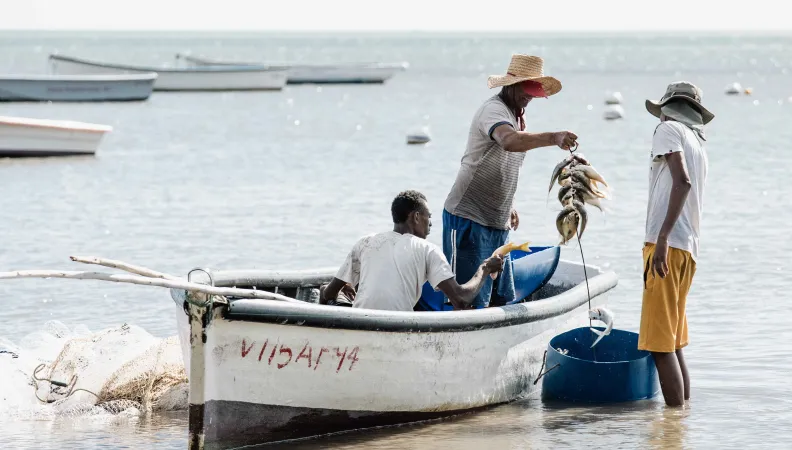
Aquatic and coastal eco-systems are the scene of much human activity.
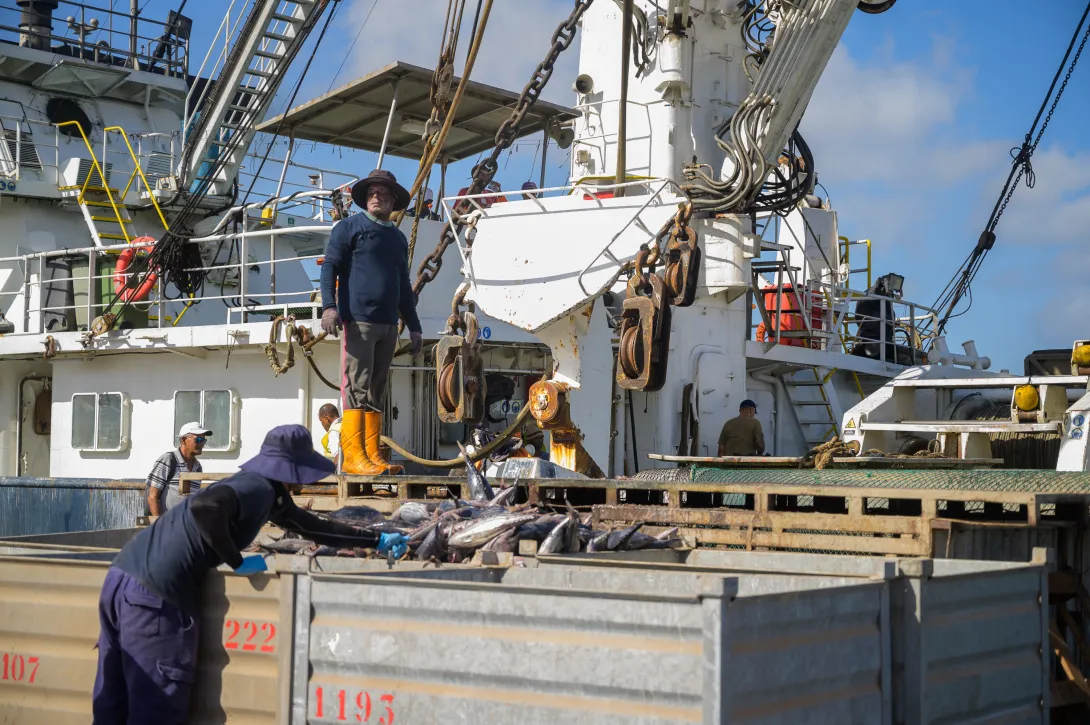
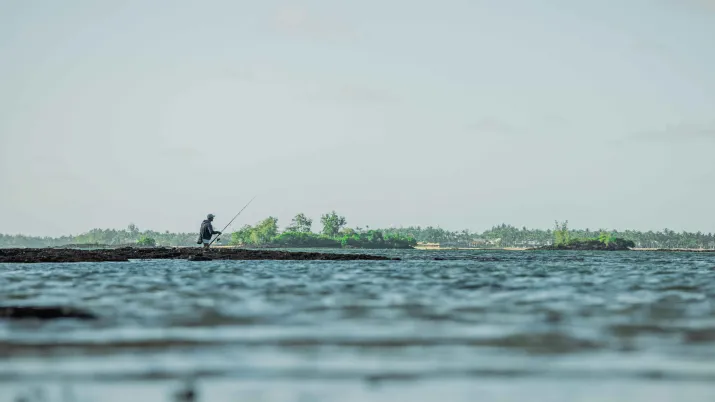
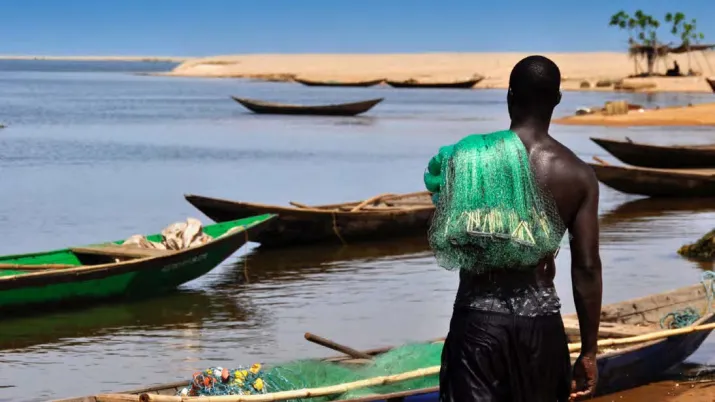
At sunrise, over 12 million small-scale fishermen take to the sea along the African coastlines. Their catch feeds entire communities, is sold at local markets and sustains entire supply chains.
And yet, this potential remains mostly under-exploited, endangered by the overexploitation of resources, pollution, coastline erosion and illicit activities at sea. The blue economy thus show great potential as the means to reconcile economic development, social inclusion and preservation of eco-systems. Expertise France has committed to over 30 blue economy projects.
Africa’s oceans and coastlines (nearly 47,000 km) contribute to food security and to an economy that generates growth and jobs. But in return this miracle resource requires the securing of ports and trade routes. The “Blue Economy” approach developed by Expertise France is a fully-fledged part of AFD Group policy which acknowledges the ocean as a life-sustaining place for shared development. AFD Group has undertaken to help restore the balance between the preservation of its environmental balance and the multiple ways people use it.
These actions are furthermore informed by the international policies adopted as part of the European Green Deal, the EU agenda for international ocean governance and African initiatives such as the Africa Blue Economy Strategy.
Eco-systems as a core feature of economic and social issues
According to the World Bank, the blue economy already generates nearly 300 billion dollars a year in Africa and could achieve much higher figures. Its potential has been estimated to create 57 million jobs by 2030.
Aquatic and coastal eco-systems form the basis of much human activity. As the planet’s “blue lungs” they play a key role in climate regulation, oxygen production and carbon capture.
In Africa, they are especially important: in some regions in West Africa, where around a third of the population live, nearly 90% of trade specific to the continent transits by sea. So these areas are both reservoirs of biodiversity and all-important economy drivers, upholding food security, jobs and territorial resilience. The intensification of human activity — urbanisation, shipping, industrial fishing, exploitation of resources — exerts growing pressure on these eco-systems.
Given these challenges, sustainable management models need to be set up.
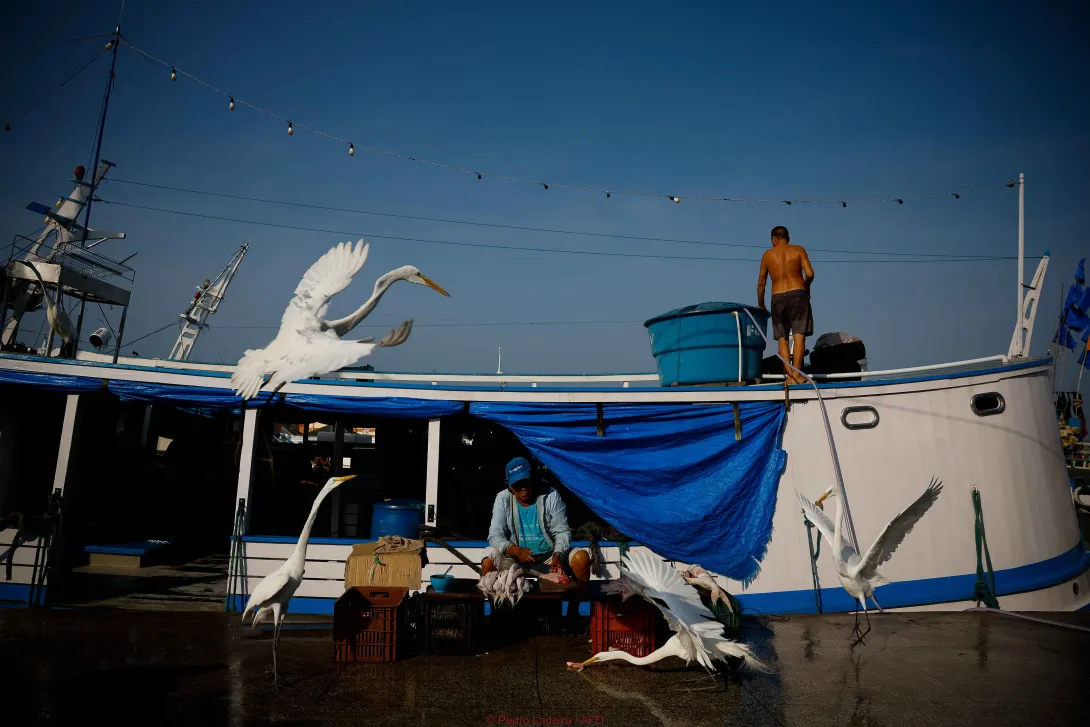
An integrated environmental approach reconciling usage and conservation
The blue economy puts forward a systemic response to these challenges. It integrates environmental, social and economic facets in order to reconcile the economic exploitation of aquatic resources and the preservation of eco-systems. It implies a transformation of modes of governance, rooted in integrated, cross-sector and participatory approaches, capable of responding to the complexity of maritime issues.
Against this backdrop, Expertise France helps partner countries to develop a Blue Economy by way of the West Africa Sustainable Ocean Program (WASOP), in 13 countries around the Gulf of Guinea and in West Africa, where 55% of regional GDP is generated by ocean-related business.
WASOP was officially launched in November 2025 at the Cabo Verde Ocean Week held in Mindelo, with the intention of rising to critical challenges such as illegal, undeclared and unregulated fishing, the loss of biodiversity, climate disruption and the limits of legal and institutional frameworks. The holistic dimension of this vast programme funded to the tune of 59 billion euros by the EU, is to tighten ocean governance, in particular for sustainable fishing, promote a sustainable, inclusive Blue Economy and preserve aquatic and coastal eco-systems, working with local residents.
Expertise France is responsible for implementing core policies aiming to support the development of a regional institutional, regulatory and financial framework conducive to driving a sustainable blue economy. As such, WASOP especially works with the West African Development Bank (BOAD) to boost the development of blue finance in the region.
For example, in Cabo Verde, “blue port/green port” technical assistance is already underway to ensure that environmental aspects are properly factored into the project to extend the Porto Grande de Mindelo, on Sao Vicente island.
Furthermore, one of the goals is to advocate for blue economy potential and support the organisation and development of regional networks of blue economy stakeholders to encourage public-private partnerships.
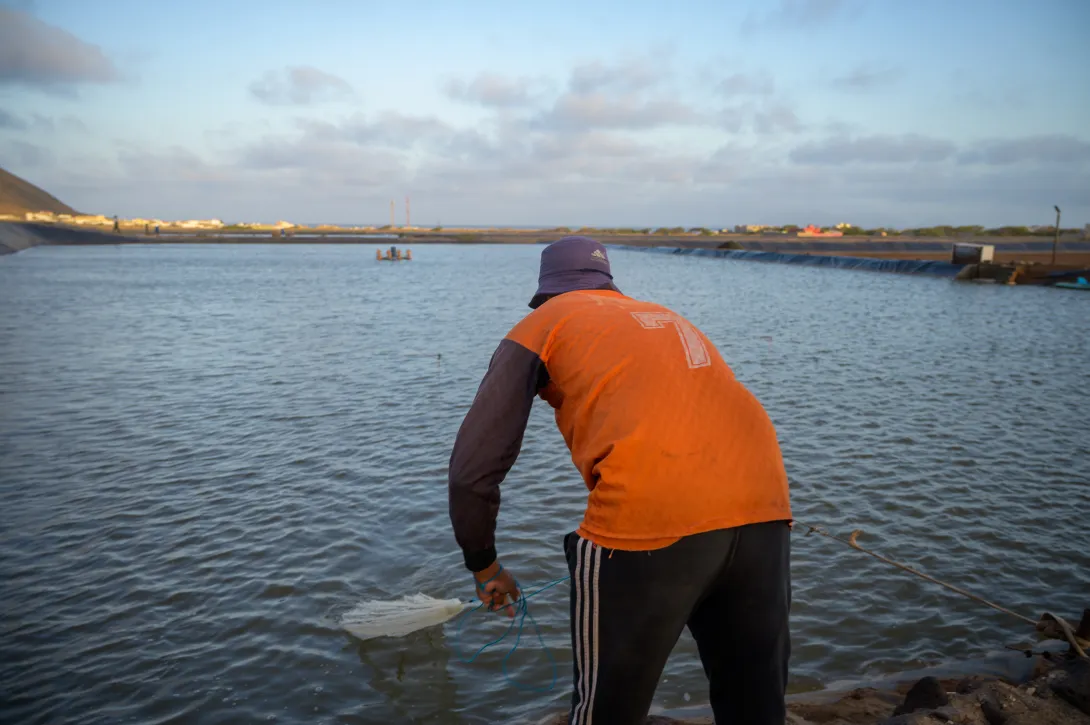
Expertise France implements Sustainable Western Indian Ocean Programme (SWIOP) initiatives to preserve aquatic biodiversity, via enhanced ocean governance, and enhanced resilience of oceanic eco-systems and blue carbon capture, in Comoros, Djibouti, Kenya, Mauritius, Madagascar, Mozambique, Seychelles, Somalia, and Tanzania.
Practically speaking, this involves technical assistance for the beneficiary countries and the Nairobi Convention's Marine Spatial Planning (MSP) programme, the Biodiversity Beyond National Jurisdiction (BBNJ) and the creation and management of Marine Protected Areas (AMP), as well as subsidies granted to civil society organisations to raise public awareness of ocean conservation, and funding and support for regional research programmes and initiatives, especially the Western Indian Ocean Marine Science Association for education and advocacy regarding marine and coastline science.
Maritime safety and security, and transition to a blue economy: indissociable notions for African ports
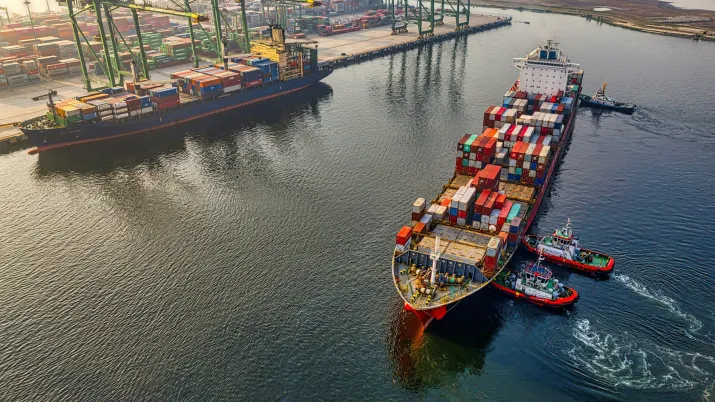
Key aspects of a blue economy include the issue of maritime security and safety. Ports are a strategic element in infrastructure, of importance in international trade, logistics chains, and as major economic hubs for the surrounding territories.
In Africa today, sea freight accounts for 58 million tonnes of goods, and according to the Indian Ocean Commission, over 90% of African imports and exports are shipped by sea, with several of the most strategic trade corridors worldwide being located in Africa.
Safeguarding their security, pushing back against illegal trafficking and building maritime monitoring capacity are thus all-important conditions to ensure fair and sustainable economic development.
Expertise France has set up the project SCOPE Africa (Securing Corridors, Ports and Exchanges in Western and Central Africa) with the aim of improving intra-African connectivity and the security and safety of strategically important ports in West and Central Africa. This will facilitate trade and shipping for sustainable economic development across the region. The €12-billion SCOPE Africa project continues Expertise France’s work in the Gulf of Guinea through to 2029, alongside partners including the Port Management Association of West & Central Africa (PMAWCA/AGPAOC), the Regional Academy of Marine Science and Technology (ARSTM) in Abidjan, the Regional Maritime University (RMU) and the Network of Maritime and Port Professional Women of West and Central Africa (RFPMP-AOC) in 10 ports: Praia (Cabo Verde), Dakar (Senegal), Monrovia (Liberia), Abidjan (Côte d'Ivoire), Lomé (Togo), Lagos (Nigeria), Douala (Cameroon), Kribi (Cameroon), Libreville (Gabon) and Pointe-Noire (Democratic Republic of Congo).
The project involves regulations and governance training for port authorities, departments and agencies with port trade connections. This training upholds environmental standards to boost climate and environmental resilience in the ports. This approach especially aims to improve goods security, risk prevention and crisis management, given that African ports handle hazardous substances such as fuel and chemicals on a daily basis (in 2025, many cars exploded in the port in Douala, halting port activity and polluting the area with toxic fumes).
The project adopts a well-laid out approach to reinforce environmental resilience in ports, identifying needs, conducting environmental impact reviews and setting up schemes to assess how well practices align with international standards.
The inclusion of important ports on the African Atlantic coast on shipping and trade corridors – Abidjan/Lagos and Mombasa/Kisangani - furthermore requires academic capacity building for staff and stronger regional coordination among the countries around the Gulf of Guinea, also involving networks such as the RFPMP-AOC. A study tour took place in Europe earlier in the year, attended by 35 professional women from ports in Europe and in West and Central Africa, in collaboration with the SCOPE Africa and EnMAR projects. This trip was an opportunity for professionals working in major African and European ports to share experiences and best practices, as well as fostering Euro-African networking.
The 4-year GSSP CALAO project works in close synergy with SCOPE Africa, especially focussing on economic integration along the Abidjan-Lagos (AL) and Abidjan-Ouagadougou (AO) corridors. With ENABEL and TradeMark Africa, the promotion of an inclusive, green approach embracing gender equality and climate resilience is an important aspect of the project to enhance regional integration within the African Continental Free Trade Area (AfCFTA) and the Economic Community of West African States (ECOWAS).
Lastly, WASOP supports the setup of the “Blue & Green Port Network”, initiated and organised by PMAWCA and officialised at Africa Forward Summit in Nairobi on 11 May. This is a network of stakeholders committed to cooperating and sharing knowledge of best practices in port management and operation. It encompasses 20 countries with coastlines and islands and 24 port authorities along the African Atlantic coast stretching from Mauritania to Angola. Its ports handle some 300 million tonnes of maritime imports and exports for the sub-region.