Share the page

SWIOP - Sustainable Western Indian Ocean Programme
Project
Published on
-
Project start date
-
Status
Ongoing
-
Project end date
-
-
Financing amount (Euro)
-
15.25m
-
Country and region
-
Comoros, Djibouti, Kenya, Mauritius, Madagascar, Mozambique, Seychelles, Somalia, Tanzania, Africa
-
Funders


The Sustainable Western Indian Ocean Programme (SWIOP) supports the sustainable, productive, climate-resilient governance and use of the Western Indian Ocean and its natural resources by addressing the challenges posed by IUU fishing, ecosystem degradation and climate change in the region.
A regional programme for preserving marine resources and promoting sustainable blue economy
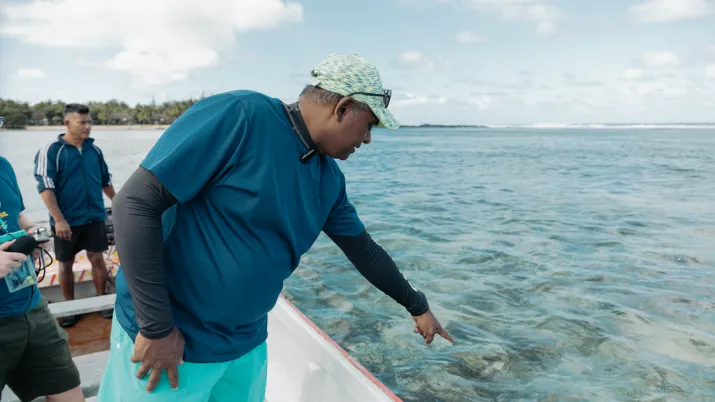
The Western Indian Ocean (WIO) region is a global biodiversity hotspot, home to diverse ecosystems such as coral reefs, mangroves, seagrasses, and coastal wetlands. These ecosystems are key to the regional economy, livelihoods and food security, and protect coastal communities from storm surges and rising sea levels, enhancing resilience to climate change. However, natural and anthropic factors are threatening the resources and services provided by the WIO. These challenges affect the potential for a sustainable blue development and growth in the region.
Taking into account this context, the European Union has developed the Sustainable Western Indian Ocean Programme to provide a structural and integrated “seascape” approach to those challenges. It is based on three complementary pillars:
- “Strengthen ocean governance, including fisheries management” (€17.75m), implemented by the UN Environment Programme (UNEP), the European Fisheries Control Agency (EFCA), the Indian Ocean Commission (IOC) and Expertise France;
- “Invest in a sustainable blue economy including strengthening the Global Gateway “blue” value chains and infrastructure” (€25m), implemented by the Deutsche Gesellschaft für Internationale Zusammenarbeit (GIZ)
- “Improve ocean ecosystem resilience and blue carbon capture” (€15.25m): implemented by Expertise France.
The overall coordination of the three pillars is supported by GIZ.
A convergence of African and European strategic priorities
The EU and WIO countries share significant strategic, environmental, and economic interests in preserving marine and coastal ecosystems and improving ocean governance. The promotion of a sustainable, inclusive and climate-resilient Blue Economy aligns with the objectives of the EU’s Global Gateway.
Shared interests are rooted in maintaining marine ecosystem services, ensuring the sustainability of fisheries, enhancing coastal protection, and securing maritime routes that are vital for global trade. This shared agenda is reinforced by global commitments under the European Green Deal, the EU International Ocean Governance Agenda (2022), and African-led frameworks like the African Union’s Blue Economy Strategy, highlighting growing EU-WIO convergence on sustainable ocean governance.
Since June 2025, the adoption of the European Ocean Pact – the first-ever long-term EU ocean policy – has further consolidated this convergence, establishing a unified framework for all EU ocean and maritime actions. One of its priorities focuses on strengthening ocean cooperation and support outside the EU, thereby reaffirming the European Union’s commitment to advancing sustainable ocean governance and blue economy partnership in regions such as the WIO.
Expertise France’s intervention to improve marine and coastal ecosystem resilience and blue carbon capture
Expertise France’s action within the framework of SWIOP focuses on improving ocean and coastal ecosystem resilience and preserving the ocean’s natural blue carbon capture function, in support to regional initiatives.
Activities include:
- Improving the management of transboundary areas and areas beyond national jurisdiction (ABNJs) through:
- Technical Assistance on maritime spatial planning, the conservation and sustainable use of marine biological diversity of areas beyond national jurisdiction (BBNJ Agreement), marine protected area management & creation, etc.;
- Small grants (€100 000) to Civil Society Organisations (CSOs) to mainstream ocean conservation awareness.
- Upscaling Nature-Based Solutions for ecosystem preservation and restoration, through:
- Grants (€1 million) to Non-Governmental Organisations (NGOs);
- A Project Study and Preparation Facility, joint with the Agence Française de Développement (AFD) to identify pilot blue carbon projects.
- Improving learning, research, outreach and knowledge of marine and coastal science, through:
- Funding and supporting regional research programmes and initiatives, including the Western Indian Ocean Marine Science Association (WIOMSA);
- Fostering partnerships with international research programmes;
- Supporting knowledge-management and dissemination of science-based information.
Sustainable Development Goals
SDG5 - Gender equality
Achieve gender equality and empower all women and girls
SDG8 - Decent work and economic growth
Promote sustained, inclusive and sustainable economic growth, full and productive employment and decent work for all
SDG13 - Climate action
Take urgent action to combat climate change and its impacts
SDG14 - Life below water
Conserve and sustainably use the oceans, seas and marine resources for sustainable development
SDG17 - Partnerships for the goals
Revitalize the global partnership for sustainable development
Our projects
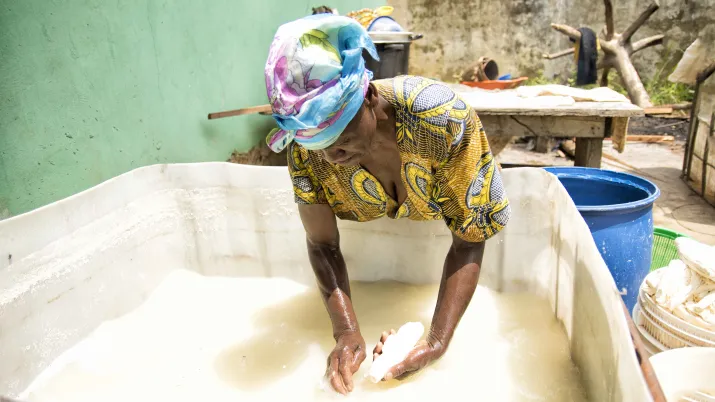
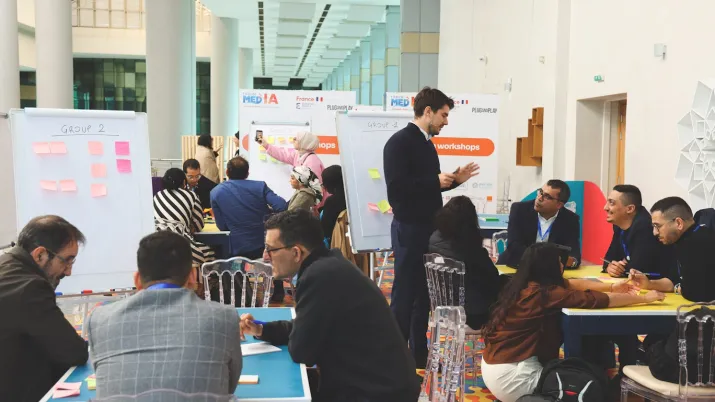
Structuring the AI Sector in the Mediterranean
Ongoing
2025 - 2027
Funders : Ministry for Europe and Foreign Affairs of France
In the news
In Southeast Asia, providing long-term support to the circular economy, health and security
Published on October 6, 2025
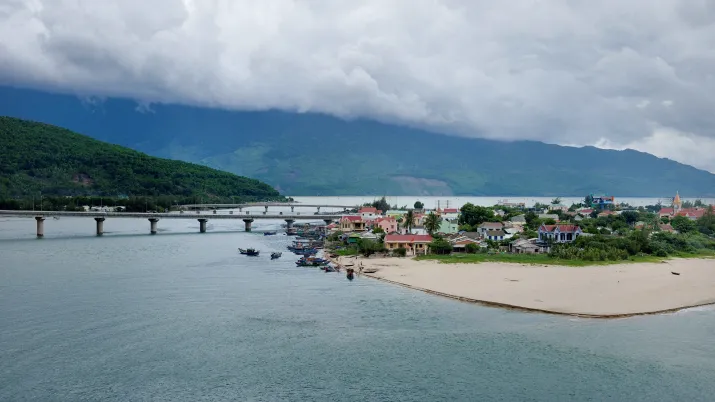
Marine areas of island territories, central to the challenges of preserving the oceans
Published on June 9, 2025