Share the page

Global Gateway Investment Climate Reform Facility
Project
Published on
-
Project start date
-
Status
Ongoing
-
Project end date
-
-
Financing amount (Euro)
-
16.7m
-
Country and region
-
Africa, The Americas, Asia and the Pacific, Afghanistan, South Africa, Angola, Antigua and Barbuda, Argentina, Bahamas, Bangladesh, Barbados, Belize, Benin, Bhutan, Burma, Bolivia, Botswana, Brazil, Burkina Faso, Burundi, Cambodia, Cameroon, Cape Verde, Chile, China, Colombia, Comoros, Congo, Costa Rica, Côte d'Ivoire, Cuba, Djibouti, Dominica, Ecuador, Eritrea, Federated States of Micronesia, Ethiopia, Fiji, Gabon, Gambia, Ghana, Grenada, Guatemala, Guinea, Equatorial Guinea, Guinea-Bissau, Guyana, Haiti, Honduras, Cook Islands, Marshall Islands, Solomon Islands, India, Indonesia, Jamaica, Kazakhstan, Kenya, Kyrgyzstan, Kiribati, Laos, Lesotho, Liberia, Madagascar, Malawi, Malaysia, Maldives, Mali, Mauritius, Mauritania, Mexico, Mongolia, Mozambique, Namibia, Nauru, Nepal, Nicaragua, Niger, Nigeria, Niue, Uganda, Uzbekistan, Pakistan, Palau, Panama, Papua New Guinea, Paraguay, Peru, Philippines, Central African Republic, Democratic Republic of the Congo, Dominican Republic, Rwanda, São Tomé and Príncipe, Saint Kitts and Nevis, Saint Vincent and the Grenadines, Saint Lucia, El Salvador, Samoa, Senegal, Seychelles, Sierra Leone, Somalia, Sudan, South Sudan, Sri Lanka, Suriname, Swaziland, Tajikistan, Tanzania, Chad, Thailand, Timor-Leste, Togo, Tonga, Trinidad and Tobago, Turkmenistan, Tuvalu, Uruguay, Vanuatu, Vietnam, Zambia, Zimbabwe

The Global Gateway Investment Climate Reform Facility supports public- and private-sector actors in building a more favourable, inclusive, and sustainable business environment to ensure that Global Gateway investments create equitable and sustainable growth and decent jobs.
Improving Global Gateway impact
Global Gateway is the European Union’s strategy for mobilising large-scale private and public investment to boost global infrastructure development in collaboration with its partner countries (2021-2027).
The 360-degree approach adopted by the EU for Global Gateway combines material investments (hard measures) and structural/regulatory reforms (technical assistance and soft measures).
The Global Gateway Investment Climate Reform Facility comes within the context of flexible measures. It helps local actors create an environment conducive to investment and business and enables them to:
- Enjoy the benefits of the expected economic, social and environmental effects of the concrete measures
- Include local authorities, the business community, and the workforce so that they can benefit from the investment
- Mainstream reforms into value chains and into local, regional, and international development plans.
These actions will help achieve a sustainable and inclusive economic impact.
The Global Gateway Investment Climate Reform Facility
As a key instrument of the Global Gateway 360-degree approach, the Global Gateway Investment Climate Reform Facility supports inclusive and sustainable development.
Through targeted advisory services, it enables partner countries to attract investment and at the same time support local and European companies in their growth and investment with confidence.
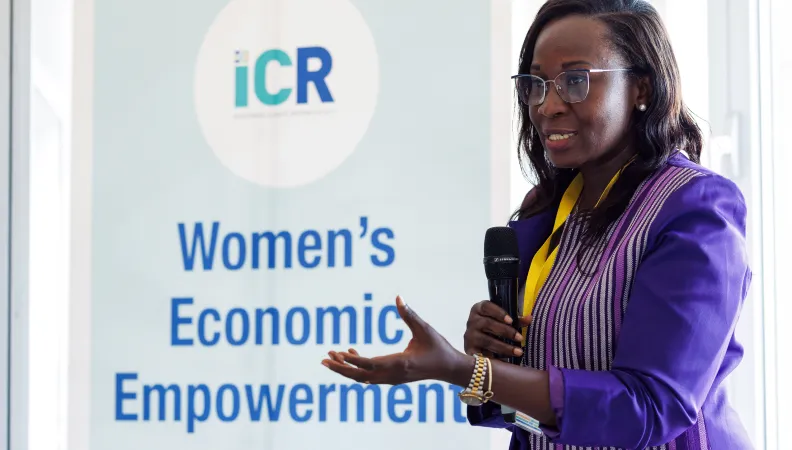
Special attention is paid to women’s economic empowerment, equal rights, equitable access to opportunities, and green and sustainable growth for all.
Phase I: the ICR Facility (2019-2025)
The current project is a follow-up to the ICR Facility implemented between 2019 and 2025, whose objective was to improve the business climate in the member states of the Organisation of African, Caribbean and Pacific States (OACPS). Its activities included:
- Improving the business environment and the investment climate
- Strengthening national and sub-regional development finance institutions
- Capitalisation and dissemination of best practices
Initiatives to improve the business environment and the investment climate
As a continuation of this first phase and based on proposals from partners, the Global Gateway Investment Climate Reform Facility provides flexible support to public and private actors in optimising regulatory reforms, institutions, and economic policy frameworks.
Technical assistance is provided by local or international experts, who can be deployed for a maximum period of 100 days per year.
Eligible applications must fall within the framework of a broader reform strategy or process that contributes to the EU’s priorities under the Global Gateway Strategy as well as to the partners’ regional and national priorities.
Broad fields of action
The Facility’s activities encompass a wide range of reform areas. They are based on the priorities of the partner countries and are directly related to Global Gateway investments and support for inclusive economic empowerment. They can include the following:
- Improving investment frameworks: Harmonising policies, regulations, and institutions to attract and retain sustainable investment, while at the same time creating a more predictable and transparent environment for private-sector actors.
- Facilitating trade and connectivity: Reducing trade-related costs and delays by streamlining procedures, fostering dialogue, and enhancing transparency, in order to facilitate cross-border trade and regional integration.
- Developing competitive value chains: identifying and enhancing high-potential sectors, supporting skills development, and quality infrastructure, as well as connecting local businesses and SMEs to regional and global markets.
- Strengthening development finance: Supporting frames of reference for public-private partnerships; building capacities in terms of environmental, social, and governance criteria and impact standards; and helping to mobilise private capital alongside public investment.
We share knowledge in several ways:
- Publishing ICR Reports along with recommendations to support climate investment, innovative financing, the economic empowerment of women, and diaspora entrepreneurship
- Developing a toolbox for decision-makers and practitioners as well as training on how to use it
- Developing online training on business environment reforms to promote the economic empowerment of women.
We promote discussion using interactive communication in the form of live events, numerous blog posts, and our LinkedIn profile.
To find out more
To Download
Sustainable Development Goals
SDG5 - Gender equality
Achieve gender equality and empower all women and girls
SDG8 - Decent work and economic growth
Promote sustained, inclusive and sustainable economic growth, full and productive employment and decent work for all
Similar Projects
Supporting the Creation of the “Armenian Brandy” Geographical Indication
Ongoing
2024 - 2026
Funders : European Union