Share the page
“We only see the tip of the iceberg”: Praveen Rahi on why One Health starts beyond hospitals
Published on
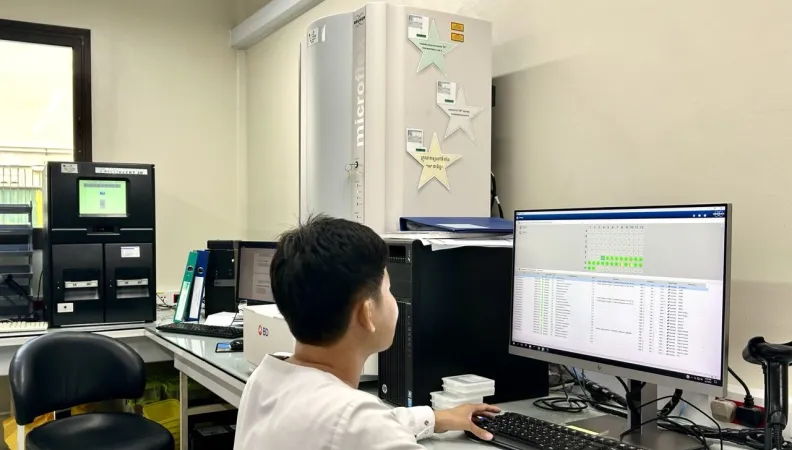
Antimicrobial resistance is often treated as a clinical issue. But for Praveen Rahi — Researcher at the Institut Pasteur du Cambodge and International Technical Expert with Expertise France — the picture is much broader.
In the context of the One Health Summit 2026 in Lyon — a high-level international meeting bringing together heads of state, scientists and global health actors to accelerate the implementation of One Health — he explains, in this interview, why understanding microbes across humans, animals and the environment is key to turning One Health into a practical response to today’s health challenges.
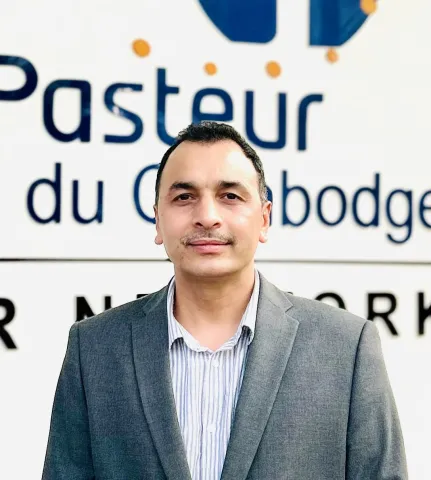
Mr Praveen Rahi, is Researcher at the Institut Pasteur du Cambodge and International Technical Expert with Expertise France. He explains, in this interview, why understanding microbes across humans, animals and the environment is key to turning One Health into a practical response to today’s health challenges.
One Health is now widely used, but it can still feel abstract. In your own experience, when did it become something concrete?
I think the One Health approach has existed in spirit for a long time. But it became more concrete in the early 2000s, after major outbreaks like SARS and avian influenza, when the need for coordinated action became clearer.
For me, a real shift happened when international organisations started working more closely together, and even more during the COVID-19 pandemic. That’s when One Health moved from being a concept to something operational, with concrete programmes on surveillance and antimicrobial resistance.
Today, we have a much stronger global consensus. One Health is no longer just an idea — it’s a framework that increasingly guides policies and actions on the ground.
Your work focuses on microorganisms across human, animal and environmental settings. Why does that matter for global health?
My work looks at microorganisms across humans, animals, plants and aquatic systems. This matters because microbial ecosystems are not compartmentalized, they are continuous and interconnected.
We see, for example, bacteria like Klebsiella indica, first identified in plants, later appearing in human clinical cases across different regions of the world. It shows that what happens in one sector does not always stay there.
This is especially important because antimicrobial resistance is fundamentally an ecological problem, not just a clinical one. Selection pressures in agriculture, aquatic systems or healthcare can influence each other through shared microbial and genetic pools.
By studying these connections, we can better understand where resistance comes from, how it spreads, and how to design responses that go beyond a single sector.
You’ve said that hospitals only show “the tip of the iceberg”. What do we miss when we look at health issues only through a clinical lens?
When we focus only on hospitals, we see patients who are already sick but we miss everything that happened before.
Hospitals are a late-stage filter. By the time a pathogen is detected in a clinical sample, it may have been circulating in the community, in water systems, livestock or soil for a long time.
This is particularly true for antimicrobial resistance. Hospital surveillance can tell us which bacteria are resistant, but not where those resistance mechanisms originated or how widely they are already present in the population.
For example, wastewater-based surveillance can give a much broader picture by capturing what is circulating at the community level, including among people who are not yet sick. This kind of information is simply invisible from a hospital perspective.
Without this broader view, we are mostly reacting to resistance once it is visible, rather than anticipating how it emerges and spreads.
Can you share a concrete example from your work that illustrates how antimicrobial resistance moves across sectors?
In one of our recent projects, we looked at bacteria circulating in humans, animals and the environment. We found that the bacterial strains were very diverse across these sectors — so it was not a case of the same strain spreading everywhere.
However, many of these different bacteria carried the same resistance genes.
This tells us that what is moving across sectors is not necessarily the bacterium itself, but the resistance genes. These genes can be exchanged between bacteria, even across different species.
In practical terms, this means that even if you control a resistant strain in a hospital, the resistance can persist and reappear through other bacteria circulating in the environment or in animals.
This is why we need to look at the system as a whole.
You are currently working in Cambodia. How does this context shape your understanding of One Health?
Working in Cambodia makes One Health very concrete.
In many settings, antibiotic use is not strictly regulated across sectors. At the same time, limited sanitation infrastructure, poor waste management and the discharge of untreated wastewater contribute to the spread of resistant microorganisms.
Climate factors also play a role. For example, flooding can facilitate the spread of bacteria across communities, agricultural land and water systems.
All of this shows that One Health approaches need to be adapted to local realities. They cannot simply be applied as global models — they have to be co-designed with local actors and embedded in local systems.
What are the main challenges in turning the One Health approach into coordinated action on the ground?
One of the main challenges is that systems still operate in silos. Even though One Health is based on connections between sectors, collaboration is not always easy in practice.
Funding is also often fragmented, which makes it difficult to sustain long-term, cross-sectoral work. In addition, environmental dimensions are still not fully integrated into many programmes.
At the same time, there is a need for innovative and locally adapted solutions, especially in resource-limited settings. For example, approaches like wastewater-based monitoring can help provide a broader picture of antimicrobial resistance at the community level.
Overall, the challenge is not understanding why One Health matters — it is making it work in practice.
In one sentence, why does One Health matter today?
Because infections and resistance don’t respect borders or species — and addressing them requires us to think and act as one.
In the news
Why sexual and reproductive rights remain a great challenge in West Africa
Published on September 3, 2026
Six Innovations to Strengthen Health Human Resources in Francophone Countries
Published on July 10, 2026
On the same topic
Promoting the resumption of essential service provision for conflict-affected communities in Ethiopia
Ongoing
2023 - 2027
Funders : Ministry for Europe and Foreign Affairs of France, European Union
L'Initiative – AIDS, Tuberculosis, Malaria
Ongoing
2011 - 2028
Funders : Ministry for Europe and Foreign Affairs of France