Share the page
Strengthening Libya’s Digital Future: Education, Innovation, and AI
Published on
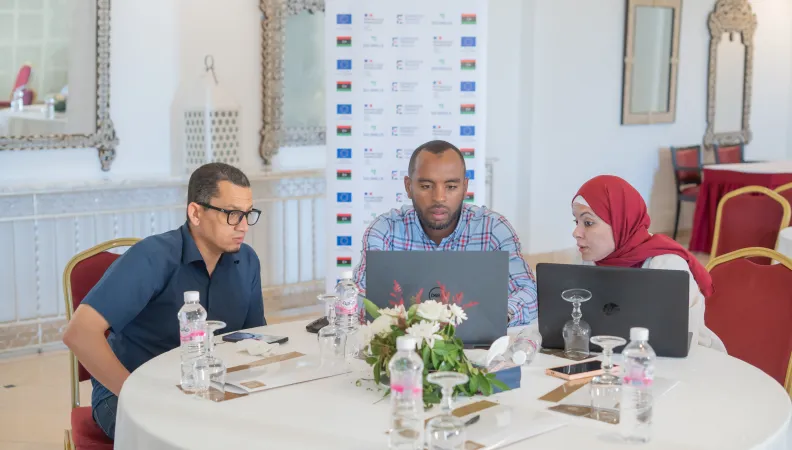
Libya’s digital transformation journey reflects a dynamic interplay of ambition, innovation, and opportunity. While digital infrastructure and coordinated support systems continue to develop, numerous initiatives are emerging across the country that collectively point toward a future where digital skills and artificial intelligence (AI) play increasingly central roles in education, public services, and economic growth.
Building on National Priorities
As Libya advances on this path, the Government has articulated a dedicated framework for AI and digital transformation in its National Strategy for Artificial Intelligence (2025–2030). The strategy emphasizes strengthening governance, expanding digital infrastructure, supporting innovation ecosystems, and investing in human capital. Central to this vision is the enhancement of digital literacy and targeted capacity building, which are foundational elements for enabling a broad and inclusive transition to digitalized systems.
This context creates both opportunities and challenges. Many young Libyans are independently acquiring digital skills and engaging with AI through self-directed learning, online resources, and community-driven events. Their creativity is visible in hackathons, startup initiatives, and tech-led competitions. However, without consistent institutional support and robust digital infrastructure, many promising ideas remain at early stages of development, and their potential impact is constrained.
EU4Skills: Supporting Skills, Innovation, and Employability
In response to these evolving needs, Expertise France and its partners have strengthened support for Libya’s digital and educational transformation. Through the EU4Skills program — funded by the European Union and co-financed by the French Government — these efforts aim to bridge the gap between education and the labour market, with a particular focus on digital skills and employability.
At the heart of this initiative is the support provided to universities and Technical and Vocational Education and Training (TVET) institutions across Libya, helping them update digital curricula and integrate Artificial Intelligence into education.
Recognizing that sustainable transformation begins with educators, EU4Skills has facilitated capacity-building programs for academic staff from all Libyan regions. These sessions cover active pedagogical methods, cloud computing, and AI fundamentals, including aspects of machine learning, deep learning, and natural language processing. Training is delivered through interactive approaches, combining group work, case studies, hands-on labs, and prototype development, to ensure participants are equipped not only with theoretical knowledge but with practical teaching tools and insights.
This capacity building has been implemented in collaboration with Esprit University, a respected Tunisian institution known for its strong focus on engineering and technology, and has enabled participants to earn industry-recognised certifications while preparing them to support the update and introduction of digital curricula at their home institutions. Through these efforts, EU4Skills directly contributes to enhancing teaching capacities, aligning academic programs with emerging digital trends and industry requirements, and ultimately strengthening the link between education and employment.
Also, as part of this capacity-building effort, a knowledge exchange trip to Paris was organized for Libyan Higher Education and TVET representatives, allowing them to explore practical models of digital transformation in education. The program included visits to Paris Santé Campus, Albert School, G2R Formation – CFA du Numérique, and CNAM, offering exposure to AI in health and data science education, industry-linked vocational training, and hybrid education models supporting continuous digital skills development. The trip concluded with discussions at the French Ministry of Higher Education and Research on national strategies for AI and existing digital platforms. This exchange deepened participants’ understanding of digital teaching practices and policy approaches, while opening doors for future collaboration between Libyan and French institutions.
Engaging Youth Innovation: National Hackathon
The digital enthusiasm in Libya extends far beyond academic halls. To stimulate this energy, EU4Skills supported the organization of “Skills & Solutions” National Hackathon, a high-stakes national competition held at the University of Tripoli.
This competition invited students and recent graduates from across Libya to propose digital prototypes that address key challenges, such as employability, sustainability, and financial inclusion.
The event attracted 85 teams, underscoring both widespread interest and technical capability among Libya’s youth. After a competitive selection process, 12 teams presented their solutions before stakeholders, media, and potential investors.
Many of the hackathon projects showcased innovative uses of AI to address real-world challenges. Ideas included a platform designed to analyze CVs and link graduates with relevant employment opportunities, a smart tourism app guiding visitors and supporting local businesses, a platform promoting sustainable agriculture and community gardening, and an intelligent savings app helping users reach personal financial goals through automated recommendations. These projects showcase the technical creativity and social impact of Libya’s youth, reflecting the range and diversity of digital innovation across the country.
Integrating Innovation through the Digital Lab
In addition to education and youth activities, Expertise France has played a major role in establishing the Digital Lab, a collaborative hub under the supervision of Libya’s General Information Authority, with technical support provided through EU-funded initiatives, the Digital Lab brings together representatives from government institutions responsible for digital transformation and serves as a focal point for innovation, strategy development, and inter-institutional cooperation.
One of the Digital Lab’s first achievements is the launch of an Innovations Map, an online platform that connects innovators, entrepreneurs, researchers, and investors. By mapping digital initiatives across Libya and providing knowledge exchange, the Digital Lab helps to strengthen the country’s innovation ecosystem and provides visibility to ongoing efforts in technology and digital services.
Toward Shared Goals
The contributions of Expertise France through the EU4Skills program align with broader Libyan and European priorities — improving digital inclusion, strengthening education and workforce capacities, and promoting ethical, human-centric approaches to technology — while complementing Libya’s national vision for AI and digital transformation.
Taken together, those efforts represent meaningful steps toward a more digitally capable and AI adaptable future for Libya. Continued cooperation among local institutions, international partners, and young innovators will remain central to sustaining momentum and ensuring that digital education translates into tangible benefits for citizens, communities, and the economy.
In the news
« Online gender-based violence is an increasingly serious issue in Palestine »
Published on March 26, 2026

Fighting Online Scams: How the EU ESIWA+ Project Strengthens Cyber Cooperation with the Indo-Pacific
Published on February 12, 2026