
Share the page
A teacher’s quest to protect childhood in a disaster-prone community
Published on
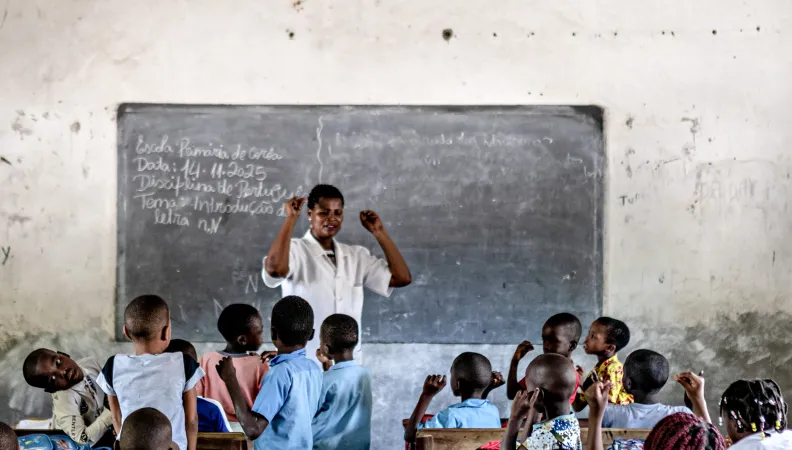
Mozambique is among the countries most vulnerable to climate change and natural disasters, with recurrent cyclones, floods, and droughts disrupting lives and damaging critical infrastructure. In the Zambezia province, extreme weather has become a recurring threat to communities and schools.
Within the Regional Teachers Initiative for Africa (RTIA), a partnership between the European Union, the African Union, UNESCO, and three European countries (France, Finland, and Belgium), Expertise France implements the RTIA Facility. Its objective is to respond to the challenges of teacher shortages in sub-Saharan Africa and improve the quality of education in these countries by developing technical assistance for national authorities and supporting operational and research projects focused on innovative approaches and their scaling up. Expertise France supports six projects in six countries aimed at improving teacher training and well-being in contexts affected by crises (security, climate, or political).
In Mozambique, in the Zambezi region, the NGO ADPP supports teachers and their communities to enable them to prepare for natural disasters that hinder access to education for a significant proportion of young children.
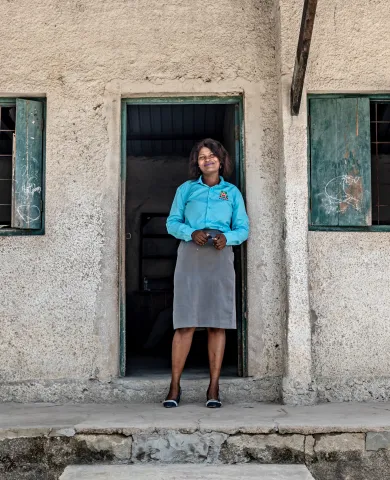
Emilia Virgilio Francisco Fernando is a first-grade teacher at Coroa Primary School in Namacurra, a town in the Zambezia province in Mozambique. A single mother of four and the caregiver of her teenage nephew, Emilia’s life has alwaysdemanded resilience. But nothing prepared her for Cyclone Freddy.
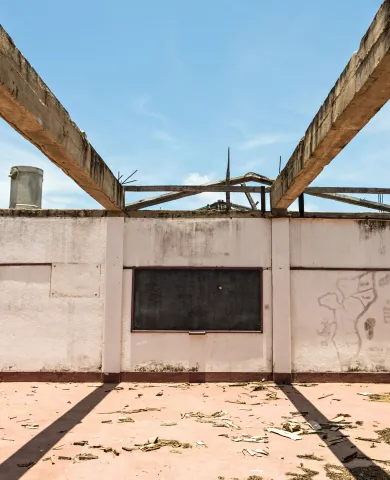
What began as heavy rains on the night of 24 February 2023 quickly turned into widespread devastation. For three consecutive days, strong winds tore through communities, uprooting trees, flattening homes, and damaging schools. At Coroa Primary School, the classroom roof was torn away and learning materials were destroyed. Children fled with their families, moving from one place to another in search of safety. Hunger followed as crops, livestock, and food reserves were lost. Prices tripled, electricity and communication networks collapsed, and daily life narrowed to meeting basic needs.
At home, Emilia faced the same destruction as her students. Part of the roof was ripped off while her daughter slept beneath. Clothes, documents and food were soaked. Beyond the physical damage, the cyclone left deep emotional scars, especially on children who struggled to comprehend the danger and were traumatized by the violence of thestorm.
In the months that followed, Emilia returned to the classroom. Beyond the lessons in the textbooks, she worked to calm her students’ fear and help them feel safe again. Like many teachers in rural Mozambique, where climate change hitshard, Emilia carries hope for her students and her community, even as she bears the weight of growing responsibilities on her own shoulders.
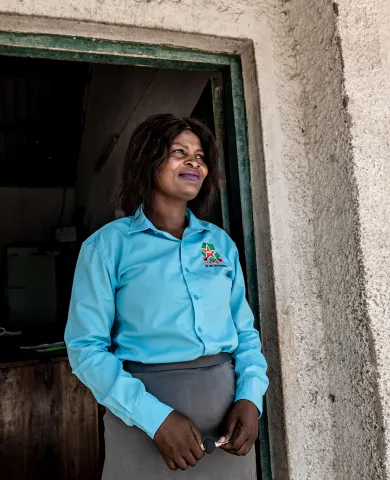
Emilia Virgilio Francisco Fernando teaches first grade at Coroa Primary School in Namacurra, a town in the Zambezia province.
 Natalia Jidovanu
When Cyclone Freddy struck in February 2023, strong winds tore the school roof. Books, desks and teaching materials were destroyed. Classrooms sat empty for months as children and teachers tried to get back on their feet.
 Natalia Jidovanu
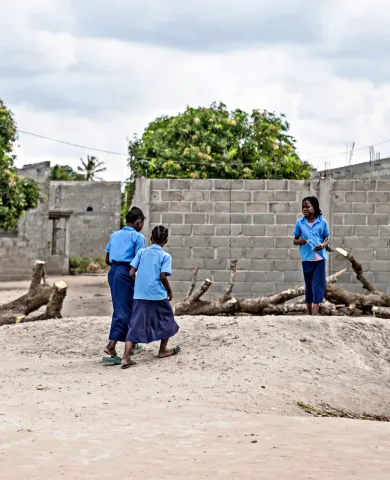
Families were forced to move between communities, scattering children far from their classrooms. Many children did not return to school, displaced by hunger and the loss of their homes.
 Natalia Jidovanu
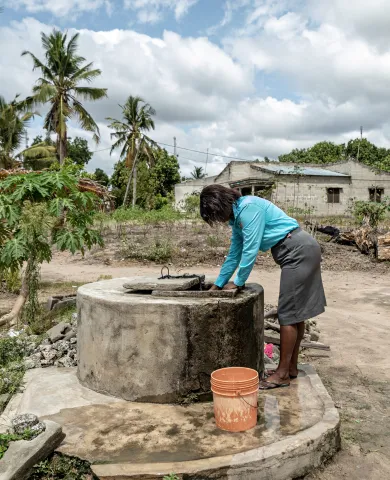
Entire neighborhoods were left unrecognizable. People were injured and lives were lost. Emilia’s own home was damaged when part of the roof was ripped away. Food and clean water became scarce, while prices tripled. Families survived on what littlethey could find, sometimes just leaves plucked from the trees.
 Natalia Jidovanu
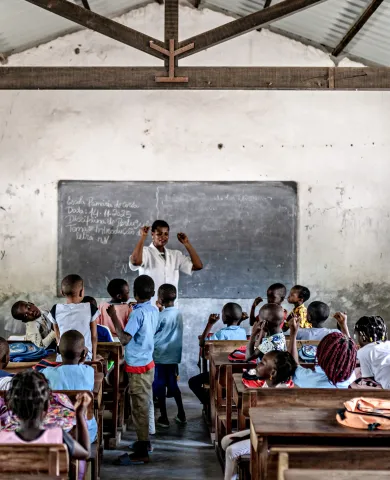
As months passed and children slowly returned, Emilia ensured they learned not only reading and writing, but also how to stay safe in extreme weather by avoiding trees, finding secure shelter, and staying indoors.
 Natalia Jidovanu
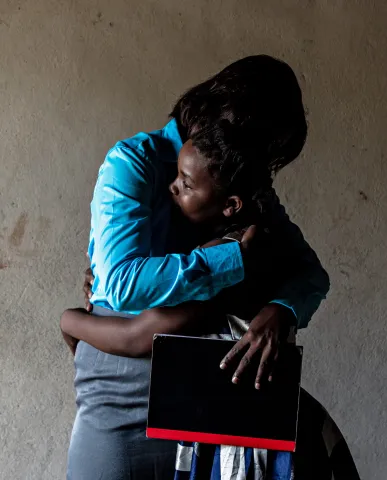
The cyclone left deep scars. Many children came to school still frightened, in need of comfort and patience to feel safe again. “I had to tell them the cyclone is over, that they should forget and not carry those memories with them”, Emilia says.
 Natalia Jidovanu
Every morning, Emilia is welcomed by tiny arms and bright smiles. “My students run to hug me”, she says, their joy reminding her why she keeps returning, despite the storms and struggles. Through “Enhancing Teachers’ Resilience and Well-Beingin Disaster-Prone Areas of Mozambique”, a project by ADPP Mozambique with support from the RegionalTeachers’ Initiative for Africa (RTIA), teachers like Emilia are equipped to help schools and communities withstand and recover from disasters. By strengthening teachers’ skills in disaster preparedness, psychosocial support, and crisis response, the project helps ensure that learning continues and children are protected even amid repeated climate shocks.
 Natalia Jidovanu
RTIA is funded by the European Union and implemented by Expertise France, EDUFI, Enabel, VVOB, APEFE, UNESCO, and the African Union.
This publication and its contents are the sole responsibility of the author and do not necessarily reflect the views of the European Union.