Share the page
Decent Work: Turning economic transitions into drivers of social justice
-
When
-
-
Schedule
-
14h30 - 16h (Paris time)
Watch the replay of the programme broadcast on 28 May 2026 on the challenges involved in promoting decent work and social justice, filmed in Mexico City!
60% of the global workforce earn their living in the informal economy
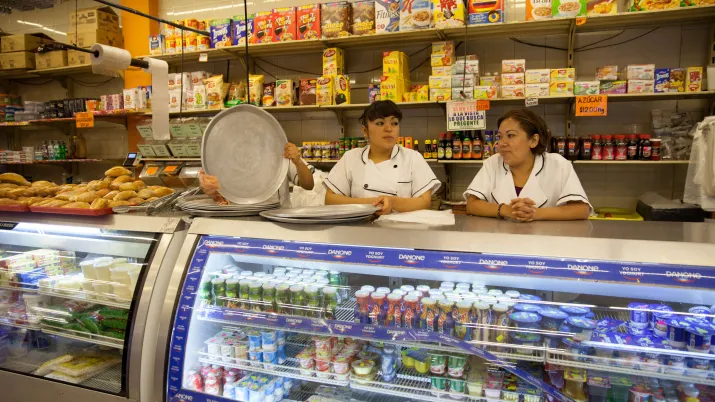
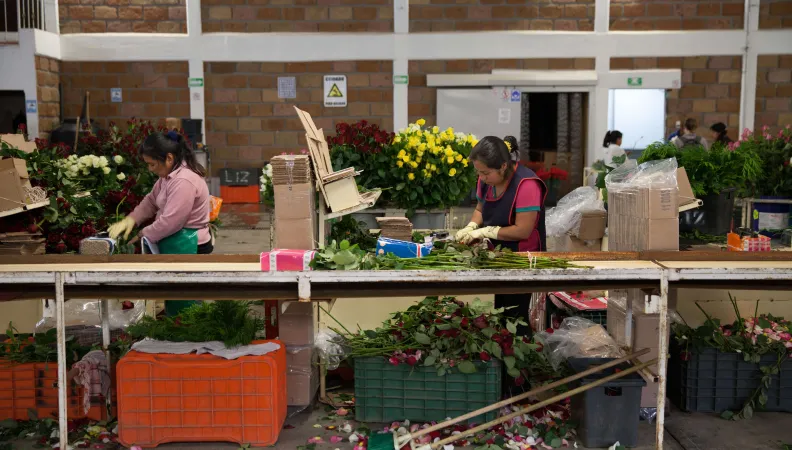
Against a backdrop of economic transition, 60% of the global workforce – nearly 2 billion people – earn their living in the informal economy, according to the International Labour Organisation. Characterised by the absence of contracts and social protection, informal work often stems from inadequate regulatory frameworks and limited access to legal alternatives for vulnerable groups. Without contractual safeguards, these workers are the first to suffer from the resulting uncertainty and precariousness.
Although no continent is immune to this phenomenon today, Latin America and the Caribbean are particularly affected, with rates of informality reaching as high as 80% in Haiti and Bolivia. Against a backdrop of persistent informality, the rise of digital platforms and the increasing precariousness of career paths, these issues are now at the heart of international priorities.
A broadcast dedicated to decent work and the drivers of social justice
To mark Latin America and Caribbean Weeks, and in the run-up to the FIFA World Cup, Expertise France is dedicating a new episode of Rendez-vous de l’Expertise to decent work and the role of international cooperation in strengthening decent work and promoting more protective public policies. Filmed in Mexico, this episode takes us to the heart of a unique setting: a country where more than one in two workers are employed outside the formal sector.
To kick off this session, an initial panel discussion brought together four experts to discuss the dynamics of the informal sector and changes in the world of work. Against a backdrop of economic tensions and widening inequalities, David Kaplan of the Inter-American Development Bank and Omar Nacif Estefan, representative of the Mexican Ministry of Labour, both spoke of the challenge of balancing the regulation of new forms of employment with economic innovation. Rossana Stanchi of AVSI México and Florence Dumontier, head of international relations at France Travail, emphasised the need for dialogue between stakeholders and the development of a shared knowledge base.
A second round-table discussion focused on the practical implementation of legal frameworks. Luisa Obrador Garrido, from the Mexican Social Security Institute, and Alejandro Rangel Segovia, General Secretary of the Metal and Mechanical Industry Workers’ Union, emphasised the importance of effectively extending social protection and improving the quality of formal jobs, which are essential conditions for sustainable formalisation. The contribution by Eduardo Lépore, Director of the EU4DecentWork project at Expertise France, complemented these discussions by highlighting the essential role of labour inspection in the effective enforcement of these measures.
on the same topic
Promoting decent work in a context of transition in Latin America
A core facet of France’s international action is decent work, as promoted by the International Labour Organization (ILO). At Expertise France, this translates into tangible support for public policies...
Published on May 28, 2026